
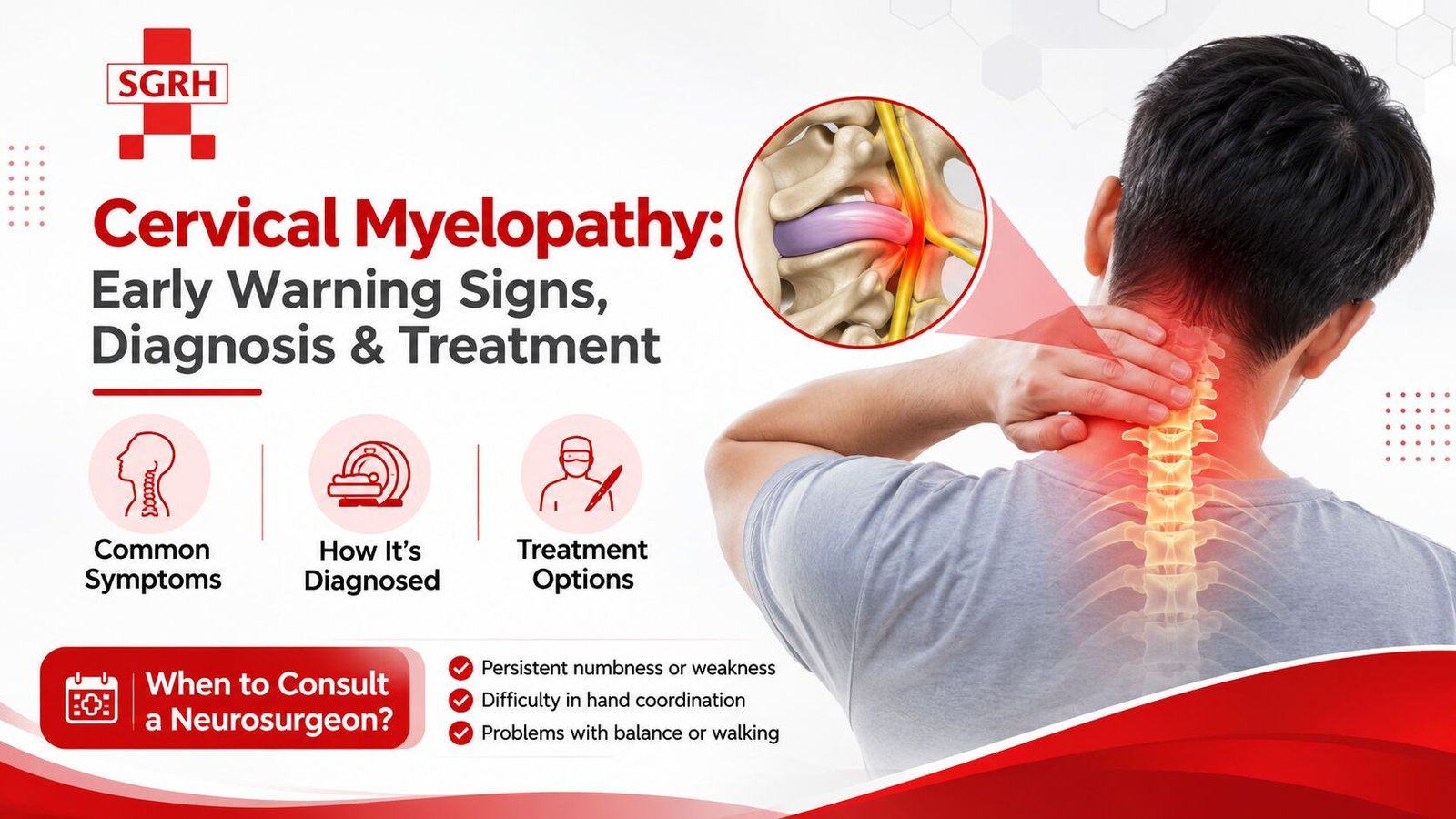
Cervical Myelopathy: Early Warning Signs, Diagnosis and Treatment Options

Experiencing persistent neck pain, numbness in your hands, difficulty holding objects, or problems maintaining balance while walking? These symptoms may sometimes indicate more than a routine neck problem.

One possible underlying condition is cervical myelopathy, a neurological condition that develops when the spinal cord in the neck becomes compressed.

Cervical myelopathy can affect movement, coordination, muscle strength, and everyday activities. Early recognition and appropriate medical evaluation are important because untreated spinal cord compression may lead to progressive neurological problems.

If you are looking for cervical myelopathy treatment in Delhi, understanding its symptoms, causes, diagnostic procedures, and available treatment options can help you make informed healthcare decisions.

In this guide, Dr. Shrey Jain, Spine and Neurosurgeon, explains the important aspects of cervical myelopathy and when specialist consultation may be necessary.

What Is Cervical Myelopathy?

Cervical myelopathy is a condition in which the spinal cord becomes compressed within the cervical spine, which is the neck region of the backbone.

The cervical spine consists of seven vertebrae that protect the spinal cord and support head and neck movement.

Over time, age-related changes, disc degeneration, bone spurs, or other spinal abnormalities may reduce the available space within the spinal canal. This can put pressure on the spinal cord and interfere with the transmission of nerve signals between the brain and the rest of the body.

The most common form is called degenerative cervical myelopathy (DCM), which generally develops due to age-related changes in the cervical spine.

Unlike ordinary neck pain, cervical myelopathy can affect both the upper and lower limbs because the spinal cord carries nerve signals to different parts of the body.

Common Symptoms of Cervical Myelopathy

The symptoms of cervical myelopathy may develop gradually and become more noticeable over time. Some patients initially experience mild discomfort, while others develop problems with movement and coordination.

Here are some important warning signs.

1. Numbness and Tingling in Hands

One of the common symptoms is numbness, tingling, or a pins-and-needles sensation in the fingers, hands, or arms.

Patients may notice reduced sensation while holding objects or performing routine activities.

2. Difficulty Holding Objects

Spinal cord compression can affect hand coordination and fine motor skills.

You may experience:

  • Difficulty buttoning shirts.
  • Trouble holding a pen.
  • Frequently dropping objects.
  • Difficulty typing or using a mobile phone.
  • Reduced finger coordination.

These changes should not be ignored, particularly when they are progressively worsening.

3. Balance Problems While Walking

Cervical myelopathy can affect the nerve signals responsible for movement and coordination.

Patients may experience:

  • Unsteady walking.
  • Frequent stumbling.
  • Difficulty maintaining balance.
  • Stiffness or weakness in the legs.
  • Increased risk of falling.

4. Neck Pain and Stiffness

Some patients experience persistent neck pain, stiffness, or restricted neck movement.

However, it is important to understand that cervical myelopathy can also occur without significant neck pain.

5. Weakness in Arms and Legs

Compression of the spinal cord can interfere with normal muscle function.

Patients may notice weakness in their hands, arms, or legs, making everyday activities more difficult.

6. Changes in Bladder or Bowel Function

In more advanced cases, spinal cord compression may affect bladder or bowel function.

New difficulty passing urine, loss of bladder or bowel control, or other sudden neurological changes require urgent medical assessment.

What Causes Cervical Myelopathy?

Several conditions can contribute to cervical spinal cord compression.

1. Cervical Spondylosis

Cervical spondylosis refers to age-related wear and tear affecting the bones, discs, and joints of the neck.

These changes may cause narrowing of the spinal canal and put pressure on the spinal cord.

2. Herniated Cervical Disc

The discs between the cervical vertebrae act as cushions.

When a disc bulges or herniates, it may press against nearby nerve structures or the spinal cord, depending on its location and severity.

3. Bone Spurs

Bone spurs, also known as osteophytes, are bony growths that may develop as part of degenerative changes.

When these growths narrow the spinal canal, they can contribute to spinal cord compression.

4. Spinal Canal Stenosis

Cervical spinal stenosis occurs when the spinal canal becomes narrower than normal.

This reduced space may place pressure on the spinal cord and cause neurological symptoms.

5. Previous Neck Injury

Certain traumatic injuries involving the cervical spine can damage spinal structures or cause compression of the spinal cord.

6. Other Medical Conditions

Less commonly, tumors, inflammatory conditions, or congenital narrowing of the spinal canal may contribute to cervical myelopathy.

How Is Cervical Myelopathy Diagnosed?

Accurate diagnosis is essential for determining the severity of spinal cord compression and selecting an appropriate treatment approach.

A spine specialist or neurosurgeon may recommend the following assessments.

1. Clinical and Neurological Examination

The doctor evaluates the patient’s symptoms, medical history, muscle strength, reflexes, sensation, and coordination.

The examination may also include assessing walking patterns, balance, and hand movements.

2. MRI of the Cervical Spine

MRI is one of the most important investigations for evaluating cervical myelopathy.

It helps identify:

  • Spinal cord compression.
  • Herniated cervical discs.
  • Narrowing of the spinal canal.
  • Degenerative changes.
  • Changes within the spinal cord.

MRI findings are interpreted alongside the patient’s symptoms and neurological examination.

3. CT Scan

A CT scan provides detailed images of the bones and can help identify bone spurs, structural abnormalities, and other changes affecting the cervical spine.

4. X-Ray

Cervical spine X-rays can help evaluate spinal alignment, vertebral changes, and certain structural abnormalities.

The doctor determines which investigations are necessary based on the individual patient’s condition.

Cervical Myelopathy Treatment Options

Treatment depends on the degree of spinal cord compression, neurological symptoms, imaging findings, and the patient’s overall health.

Not every patient requires immediate surgery. However, progressive neurological symptoms require timely specialist assessment.

1. Non-Surgical Treatment

In selected patients with mild symptoms, a specialist may consider non-surgical management and close clinical monitoring.

Depending on the diagnosis, treatment may involve:

  • Prescribed medications for symptom management.
  • Supervised physiotherapy.
  • Activity modification.
  • Rehabilitation.
  • Regular neurological assessments.

It is important to understand that non-surgical treatment may help manage symptoms, but it does not necessarily relieve the underlying spinal cord compression.

Patients should avoid self-prescribing medication or performing aggressive neck exercises without medical guidance.

2. Cervical Spine Surgery

When spinal cord compression is significant, neurological symptoms are progressing, or the patient has moderate to severe myelopathy, surgery may be recommended.

The primary objective is to relieve pressure on the spinal cord and prevent further neurological deterioration.

Depending on the patient’s condition, surgical options may include:

Anterior Cervical Discectomy and Fusion (ACDF):

This procedure involves removing the problematic disc through an approach from the front of the neck. The affected level is then stabilised using an appropriate fusion technique.

Cervical Laminectomy:

This procedure involves removing part of the vertebral bone at the back of the spine to create more space for the spinal cord.

Cervical Laminoplasty:

This procedure involves reshaping or opening the lamina to increase the available space within the spinal canal while preserving some of the natural spinal structures.

Cervical Decompression and Fusion:

In selected cases, decompression may be combined with spinal fusion to relieve pressure and maintain spinal stability.

The most appropriate procedure depends on the number of affected levels, spinal alignment, location of compression, and other clinical factors.

Is Cervical Myelopathy a Serious Condition?

Yes. Cervical myelopathy can become serious if spinal cord compression continues to progress.

Without appropriate evaluation and treatment, patients may experience:

  • Increasing muscle weakness.
  • Persistent numbness.
  • Difficulty walking.
  • Reduced hand coordination.
  • Frequent falls.
  • Permanent neurological impairment.

The severity and progression vary between individuals.

Early specialist assessment can help identify the condition and determine whether monitoring, conservative management, or surgery is appropriate.

Can Cervical Myelopathy Be Prevented?

Not all cases of cervical myelopathy can be prevented, particularly those associated with age-related spinal degeneration.

However, maintaining general spinal health and avoiding unnecessary neck strain may help support neck function.

Some useful practices include:

  • Maintain a comfortable posture while working.
  • Take regular breaks from prolonged screen use.
  • Avoid sudden or forceful neck movements.
  • Maintain appropriate physical activity.
  • Follow medical advice for existing neck conditions.
  • Seek medical assessment for persistent numbness, weakness, or balance problems.

These measures do not guarantee prevention of spinal cord compression.

When Should You Consult a Neurosurgeon?

You should consider consulting a spine specialist or neurosurgeon if you experience persistent neck discomfort accompanied by numbness, hand weakness, difficulty walking, or reduced coordination.

An early assessment becomes particularly important when symptoms are progressively worsening.

Seek urgent medical attention if you develop sudden or rapidly worsening limb weakness, new walking difficulties, or changes in bladder or bowel function.

A neurosurgical consultation helps determine whether the symptoms are related to cervical myelopathy or another neurological or spinal condition.

Consult Dr. Shrey Jain for Spine and Neurosurgical Evaluation in Delhi

Choosing the right specialist is an important part of managing cervical spine conditions.

Dr. Shrey Jain is a Spine and Neurosurgeon in New Delhi with experience across various areas of brain and spine surgery.

His areas of practice include:

  • Spine surgery.
  • Brain surgery.
  • Minimally invasive neurosurgery.
  • Endoscopic spine procedures.
  • Neurovascular intervention.
  • Functional neurosurgery.

Dr. Shrey Jain focuses on understanding each patient’s condition and evaluating appropriate treatment options based on clinical findings and diagnostic investigations.

If you are experiencing symptoms associated with cervical spinal cord compression, a specialist consultation can help you understand your diagnosis and available treatment approaches.

Book Your Consultation with Dr. Shrey Jain

Website: https://drshreyjain.com/

Phone: +91-8448715518

Location: Sir Ganga Ram Hospital, Old Rajinder Nagar, New Delhi.

Frequently Asked Questions (FAQs)

1. What is the difference between cervical spondylosis and cervical myelopathy?

Cervical spondylosis refers to age-related degenerative changes in the neck. Cervical myelopathy develops when spinal cord compression occurs, often due to these degenerative changes.

2. Can cervical myelopathy cause difficulty walking?

Yes. Compression of the cervical spinal cord can affect the nerve pathways responsible for balance, coordination, and movement, resulting in unsteady walking or difficulty maintaining balance.

3. Is surgery necessary for cervical myelopathy?

Not every patient requires surgery. Treatment depends on symptom severity, neurological findings, and MRI results. Surgery is often considered for moderate to severe or progressive cases to relieve spinal cord compression.

4. Which scan is best for diagnosing cervical myelopathy?

MRI of the cervical spine is generally the preferred imaging investigation because it helps visualize the spinal cord, discs, and surrounding soft tissues.

5. Can cervical myelopathy cause hand weakness?

Yes. Spinal cord compression can affect hand strength, coordination, and fine motor skills. Patients may experience difficulty gripping objects or performing routine tasks.

6. Can cervical myelopathy become permanent?

Severe or prolonged spinal cord compression can cause lasting neurological impairment. Early diagnosis and appropriate treatment may help prevent further deterioration, although complete recovery cannot be guaranteed.

7. Which doctor treats cervical myelopathy in Delhi?

A qualified spine surgeon or neurosurgeon can evaluate cervical myelopathy and recommend appropriate treatment based on the patient’s symptoms, examination, and imaging findings.

Conclusion

Cervical myelopathy is an important spinal condition that should not be confused with ordinary neck pain or stiffness. Symptoms such as hand numbness, muscle weakness, poor coordination, and difficulty walking may indicate spinal cord compression.

Recognising these warning signs and seeking timely specialist evaluation can make an important difference in treatment planning.

If you are experiencing symptoms of cervical myelopathy, consult a qualified spine specialist to understand the underlying cause and available treatment options.

best doctor for parkinson’s disease

Best doctor for Parkinsons

Dr. Shrey Jain: A Visionary in Parkinson’s Care

Introduction

Living with Parkinson’s disease can be challenging, but having the right neurologist by your side can make all the difference in managing symptoms and improving quality of life. In this blog, we’ll introduce you to one of the Specialist for parkinsons Dr. Shrey Jain.

Who Is Dr. Shrey Jain?

Dr. Jain is trained in the most advanced techniques of brain and spine surgery, making him one of the best neurosurgeons in Delhi1. His expertise extends across major neurosurgical subspecialties, including brain tumors, epilepsy surgery, and spinal fusion. But it’s his commitment to Parkinson’s disease that truly sets him apart.

A Profound Commitment to Parkinson’s Care

Dr. Shrey Jain’s journey towards becoming the best doctor for Parkinson’s care is marked by a profound commitment. With a foundation of rigorous training and hands-on experience, he has emerged as a visionary in the diagnosis, treatment, and management of Parkinson’s disease2.    

Expert Diagnosis and Treatment

Dr. Jain offers expert diagnosis, treatment, and support for Parkinson’s patients. His compassionate approach and years of experience make him a trusted specialist in the field3. Whether it’s deep brain stimulation or other innovative therapies, Dr. Jain tailors his approach to each patient’s unique needs.

Conclusion

When it comes to Parkinson’s care, Dr. Shrey Jain stands out as a Best doctor for Parkinsons. His dedication, expertise, and patient-centered approach make him the best choice for those navigating the challenges of Parkinson’s disease4. If you’re seeking the specialist for Parkinson’s, look no further than Dr. Jain. 

Best stroke Doctors Delhi

Best doctor for stroke

Dr. Shrey Jain: Your Trusted Partner in Stroke Care

 The Best Doctor for Stroke

Introduction

When it comes to stroke care, finding the Best doctor for stroke can make all the difference. Meet Dr. Shrey Jain—a dedicated neurologist with a passion for improving lives. His unwavering commitment to patient well-being sets him apart as the best in the field.

Understanding Stroke: A Silent Threat

Stroke, often referred to as a “brain attack,” strikes silently and swiftly. It disrupts blood flow to the brain, leading to potentially devastating consequences. Recognizing the signs and seeking immediate medical attention is crucial.

Dr. Jain’s Expertise

Dr. Shrey Jain combines extensive knowledge with a compassionate approach. His credentials speak volumes: board-certified in neurology, fellowship-trained in stroke management, and a tireless advocate for stroke prevention.

Personalized Care: Beyond Medicine

Dr. Jain believes in treating the whole person, not just the condition. His consultations are thorough, allowing patients to share their concerns openly. He listens, empathizes, and tailors treatment plans to individual needs.

Cutting-Edge Treatments

From clot-busting medications to advanced interventional procedures, Dr. Jain stays at the forefront of stroke treatments. His commitment to research ensures that patients benefit from the latest breakthroughs.

Rehabilitation and Recovery

Surviving a stroke is only the beginning. Dr. Jain guides patients through rehabilitation, helping them regain independence. His holistic approach considers physical, emotional, and cognitive aspects of recovery.

Community Impact

Dr. Shrey Jain actively educates the community about stroke prevention. His workshops, awareness campaigns, and public talks empower people to recognize risk factors and act swiftly.

Conclusion: Trust Dr. Jain

When it comes to stroke care, trust matters. Dr. Shrey Jain’s expertise, compassion, and dedication make him the best doctor for stroke. Remember: time lost is brain lost—seek help promptly.


Feel free to customize this blog post further or add any specific details you’d like to highlight. Dr. Jain’s impact on stroke prevention and patient outcomes is truly commendable! 😊👨‍⚕️🧠

Movement disorders – Symptoms and causes

Best surgeon for Brain tumours in Delhi

Understanding Movement Disorders: Symptoms and Causes

Introduction

Movement disorders are a group of neurological conditions that affect a person’s ability to control their movements. These disorders can lead to either increased or reduced movements. Meet Dr. Shrey Jain Best surgeon for Brain tumours in Delhi he treats all these problems.  Let’s explore the common types of movement disorders and their symptoms:

Types of Movement Disorders

  1. Ataxia : Ataxia affects the part of the brain responsible for coordinated movement. It may cause clumsy movements, loss of balance, and difficulty walking.
  2. Chorea: Chorea results in brief, irregular, involuntary movements that occur repeatedly.
  3. Dystonia: Dystonia leads to muscle contractions, causing twisting of the body.
  4. Functional Movement Disorder: This disorder manifests as abnormal movements due to psychological or emotional factors.
  5. Multiple System Atrophy: A progressive disorder affecting various body systems, including movement.
  6. Myoclonus: Myoclonus causes sudden, involuntary muscle jerks.
  7. Parkinson’s Disease: A well-known movement disorder characterized by tremors, stiffness, and slow movements.
  8. Parkinsonism: Similar to Parkinson’s disease but with different underlying causes.

Best Brain Tumor Surgeons in Delhi

When it comes to brain tumors, choosing the right surgeon is crucial. Here are some top neurosurgeons in Delhi who specialize in brain tumor surgery:

  1. Dr. Shrey Jain:

    • Renowned gastrointestinal and hepatobiliary pancreatic surgeon.
    • Trained in advanced laparoscopic colorectal surgery.
    • Official trainer for colorectal and bariatric surgery at ETHICON 

Dr. Shrey Jain is acclaimed as Best surgeon for Brain tumours in Delhi, specializing in brain tumors and related conditions. With over a decade of experience, he has earned a reputation for excellence in neurosurgery. Here’s why you should consider Dr. Jain for your neurosurgical needs:

  1. Advanced Techniques: Dr. Jain is trained in the most advanced techniques for brain and spine surgery. His expertise spans various neurosurgical subspecialties, including brain tumors, epilepsy surgery, and spinal fusion1.

  2. Compassionate Care: Recognizing that each patient’s journey is unique, Dr. Jain and his compassionate team provide holistic care. They address not only physical aspects but also psychological and social needs throughout the treatment process.

  3. Peace of Mind: Dr. Jain’s personalized approach ensures peace of mind for patients. Whether it’s brain tumor surgery or other neurosurgical interventions, quality care and superior results are guaranteed.


Remember, early diagnosis and timely intervention are crucial for managing movement disorders and brain tumors. Consult these skilled surgeons for personalized care and treatment. 🧠💙

One of the best neurosurgeon in Delhi

Top neurosurgeon in Delhi

op neurosurgeon in Delhi


Looking for a Best neurosurgeon in Delhi NCR ?

Best neurosurgeon in Delhi NCR

Best neurosurgeon in Delhi NCR 

Best neurosurgeon in Delhi NCR: 


Best neuro physician in Gangaram hospital

best neuro physician in ganga ram hospital

Dr. Shrey Jain: The Neurosurgeon You Can Trust at Gangaram Hospital

Introduction

When it comes to neurological health, choosing the right doctor is crucial. Dr. Shrey Jain, a renowned best neuro surgeon in ganga ram hospital , stands out as a beacon of expertise and compassion. With years of experience, Dr. Jain focuses on personalized patient care, making a significant impact on those dealing with neurological conditions.

Why Choose Dr. Shrey Jain?

Expertise: Dr. Jain’s extensive background in neurology equips him with unparalleled diagnostic skills. His surgical methods are precise and effective, ensuring optimal outcomes for patients.

Compassionate Care by best neuro surgeon in ganga ram hospital : Beyond technical expertise, Dr. Jain listens attentively to his patients. He respects their unique concerns and tailors treatment plans accordingly.

Neurological Services Offered

Stroke Management: Dr. Jain specializes in preventing, managing, and providing follow-up care for stroke patients. Early intervention is critical.

Epilepsy Treatment: Customized treatment plans, including medications and dietary guidance, are part of Dr. Jain’s approach.

Movement Disorders: Whether it’s Parkinson’s, essential tremors, or dystonia, Dr. Jain’s interventions enhance patients’ quality of life.

Headache Clinic: Dr. Jain’s clinic focuses on accurate diagnosis and effective management of persistent headaches.

Conclusion

Choosing Dr. Shrey Jain as your neurosurgeon isn’t just about medical care; it’s about partnering with someone dedicated to improving your neurological well-being. Trust Gangaram Hospital and Dr. Jain to be your allies in this transformative journey.

Best Neurosurgeons in Delhi

top neurosurgeon in delhi

Top Neurosurgeon in Delhi: Dr. Shrey Jain

Expertise, Compassion, and Cutting-Edge Care

When it comes to neurosurgery, finding the right specialist is crucial. Dr. Shrey Jain, a renowned neurosurgeon in Delhi, stands out for his exceptional skills, compassionate approach, and commitment to patient well-being. Let’s delve into why he is considered one of the top neurosurgeons in the capital city.

1. Credentials and Experience

Dr. Jain’s impressive credentials include an MBBS degree and specialized training in neurosurgery. With over a decade of experience, he has honed his expertise in complex brain and spine surgeries. His commitment to staying updated with the latest advancements ensures that patients receive the best care.

2. Specialized Services

Dr. Shrey Jain offers a wide range of specialized services:

  • Brain Tumor Surgery: Whether it’s a benign tumor or a malignant growth, Dr. Jain’s surgical precision ensures optimal outcomes.
  • Spinal Surgeries: From herniated discs to spinal deformities, he addresses various spine conditions.
  • Minimally Invasive Techniques: Dr. Jain embraces minimally invasive approaches, reducing patient discomfort and promoting faster recovery.
  • Neurocritical Care: He provides comprehensive care for critically ill patients with neurological emergencies.

3. Awards and Recognitions

Dr. Jain’s dedication has earned him accolades:

  • Excellence in Neurosurgery: His commitment to patient outcomes has been recognized by medical societies.
  • Patient Testimonials: Satisfied patients often share their success stories, praising Dr. Jain’s personalized care.

4. Patient-Centric Approach

Dr. Shrey Jain believes in treating patients like family. He listens attentively, explains treatment options, and ensures informed decision-making. His empathetic approach alleviates anxiety and fosters trust.

5. Cutting-Edge Technology

Dr. Jain’s practice is equipped with state-of-the-art technology. From advanced imaging to precision tools, he leverages innovation for accurate diagnoses and successful surgeries.

6. Visit Dr. Shrey Jain

Ready to consult one of Delhi’s top neurosurgeons? Visit Dr. Shrey Jain’s website for more information and to book an appointment. Your neurological health is in capable hands!

Remember, when it comes to your brain and spine, choose expertise, compassion, and excellence—choose Dr. Shrey Jain.

Top Brain tumor Doctors in Delhi

Best surgeon for Brain tumours in Delhi

Who is the best Neuro physician in Ganga Ram Hospital?

best neuro physician in ganga ram hospital


Discover Dr. Shrey Jain


Neurological disorders, especially when it comes to treatment choice, needs the right doctor. Dr. Shrey Jain is identified as the best neuro physician in Ganga Ram Hospital. He is an expert and driven worker, which make him a popular choice.


Expertise in Neurology


Shrey Jain has specialised in neurological disorders treatment throughout the course of his career as a doctor. His extensive knowledge in the neurological area of specialization concerning patients guarantees the fluency of high-quality treatments. So irrespective of whether it is a run-of-the-mill condition like a headache or a first-world neurologic ailment, the doctor’s method is careful and empathetic.


Patient-Centered Approach


This puts Dr. Jain at a vantage when it comes to the best neuro physician in Ganga Ram Hospital because he is patient focused. He also emphases the importance of patient care to the extent that he would like to listen to his patients and know their worries.
This helps in making recommendations about the treatments as unique to patient’s requirements hence helping in improving quality of life.

Cutting-Edge Treatments


Thus, Dr. Shrey Jain keeps practicing different neurology innovations and apprising himself with new information. He treats his patients with state-of-art treatment towards giving the best results to the patients.
It also reveals that he is more committed to education and research which make his patients receive the latest advancements in the filed.

Testimonials and Success Stories


Such evident appreciation of Dr. Jain’s work emphasizes patients’ perception of him as their dedicated and highly qualified doctor.
Several have testified on how he treated them for or assisted them to control their neurological disorders. All these go a long way in supporting his proclaim as the best neuro physician in Ganga Ram Hospital.

Why Choose Dr. Shrey Jain?


It is a promise of excellent neurological care when a patient decides to be treated by Dr. Shrey Jain. He shares patients’ welfare in his heart, accompanied by his rich experience and expertise, there is no better neuro physician than him.

Consult Dr. Jain for general well-being and the expectations of the different health facilities available in Ganga Ram Hospital.
Thus, the final recommendation of the best neuro physician in Ganga Ram Hospital is Dr. Shrey Jain. His skill, sensitivity, and work ethic make him the best choice for neurological patients.