
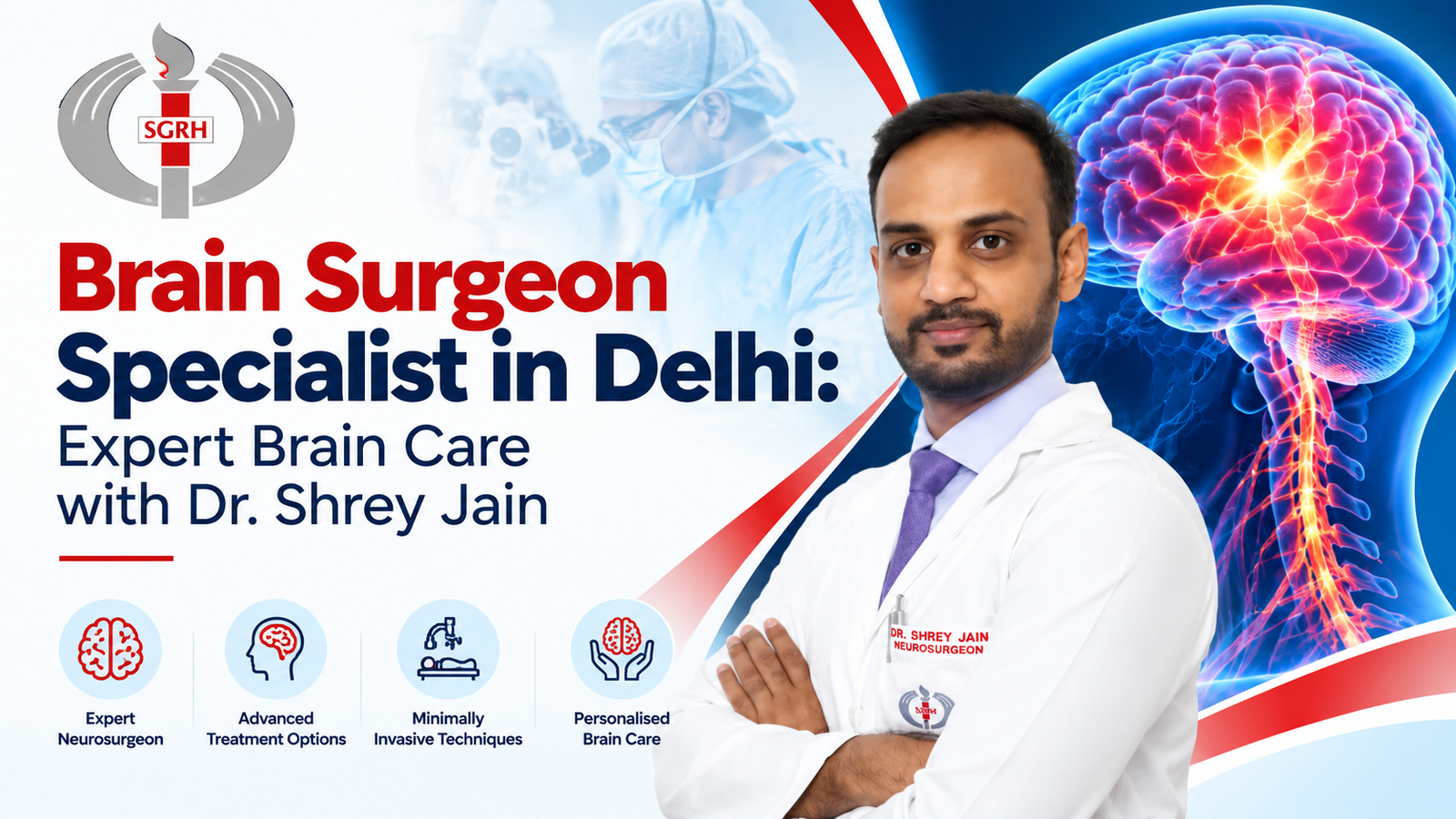
The brain controls essential functions such as movement, memory, speech, sensation, coordination, and decision-making. When a condition affects the brain or the surrounding structures, timely diagnosis and specialist medical care are important. For patients and families searching for a brain surgeon specialist in Delhi, understanding the available treatment options can help them make informed decisions about their healthcare.
Dr. Shrey Jain is a neurosurgeon associated with Sir Ganga Ram Hospital in New Delhi. His clinical interests include brain and spine surgery, endoscopic neurosurgery, neuro-oncology, vascular neurosurgery, and functional neurosurgery. His approach focuses on evaluating each patient’s condition and determining an appropriate treatment plan based on the diagnosis and individual needs.
What Does a Brain Surgeon Specialist Do?
A brain surgeon, also known as a neurosurgeon, is a medical specialist trained to evaluate and treat conditions affecting the brain, spinal cord, and nervous system. Depending on the diagnosis, treatment may involve monitoring, medication, other non-surgical approaches, or a surgical procedure.
A neurosurgeon may assess conditions such as:
- Brain tumours and other abnormal growths
- Brain haemorrhage and certain blood vessel abnormalities
- Head injuries requiring specialist assessment
- Hydrocephalus, a condition involving excess cerebrospinal fluid in the brain
- Selected cases of epilepsy that may benefit from surgery
- Certain movement disorders that may be considered for functional neurosurgery
- Other structural conditions affecting the brain and nervous system
Not every neurological condition requires an operation. A specialist evaluation helps determine whether surgery is necessary and which treatment options are appropriate.
When Should You Consult a Brain Surgeon in Delhi?
A consultation with a neurosurgeon may be recommended when symptoms, examination findings, or imaging reports suggest a condition that may require neurosurgical assessment.
Consider seeking medical advice if you experience:
- Persistent or progressively worsening headaches, particularly with other neurological symptoms
- Repeated seizures or a newly diagnosed seizure disorder
- Weakness, numbness, or changes in coordination
- Problems with speech, vision, balance, or movement
- Confusion or changes in alertness
- A brain lesion or tumour identified on an MRI or CT scan
- Symptoms following a significant head injury
- A diagnosed brain aneurysm or another abnormality of the brain’s blood vessels
Seek emergency medical care immediately for a sudden, unusually severe headache, new weakness on one side of the body, sudden difficulty speaking, loss of consciousness, or a seizure lasting five minutes or longer. Do not wait for a routine appointment when symptoms may indicate a medical emergency.
Brain Conditions That May Require Neurosurgical Treatment
1. Brain Tumours
Brain tumours can be benign or malignant and may develop in different areas of the brain or nearby structures. Their effects depend on factors such as size, location, growth pattern, and pressure on surrounding tissue.
Evaluation may include neurological examination and MRI or other imaging tests. Depending on the type and location of the tumour, treatment may involve observation, surgery, radiation therapy, medication, or a combination of approaches.
When surgery is recommended, the neurosurgeon considers the safest suitable method for obtaining tissue for diagnosis, removing as much of the tumour as appropriate, or relieving pressure on the brain.
2. Brain Aneurysms and Vascular Abnormalities
A brain aneurysm is a weakened area of a blood vessel that can bulge outward. Some aneurysms remain unruptured, while a ruptured aneurysm can cause life-threatening bleeding. Other vascular conditions, including arteriovenous malformations (AVMs), may also require specialist assessment.
Management depends on the abnormality’s size, location, symptoms, rupture risk, and the patient’s overall health. Options may include monitoring, endovascular treatment, or surgery in selected cases.
A sudden severe headache, particularly when accompanied by vomiting, neck stiffness, fainting, or neurological changes, requires emergency assessment.
3. Head Injuries
Head injuries range from mild trauma to serious conditions involving bleeding, swelling, skull fractures, or damage to brain tissue. Some injuries require observation, while others need urgent intervention.
A neurosurgical assessment may be necessary when imaging reveals a significant abnormality or the patient develops neurological symptoms. Following a serious head injury, increasing drowsiness, repeated vomiting, worsening headache, seizures, or confusion should be treated as warning signs.
4. Hydrocephalus
Hydrocephalus occurs when cerebrospinal fluid builds up in the brain’s fluid-filled spaces. This can increase pressure and affect brain function.
Treatment depends on the underlying cause and may include a procedure to divert fluid, such as shunt surgery, or an endoscopic procedure in selected patients. Early diagnosis and appropriate management are important to reduce the risk of complications.
5. Epilepsy and Selected Movement Disorders
Some people with epilepsy continue to experience seizures despite appropriate medication. In carefully selected cases, a specialist team may evaluate whether epilepsy surgery could help.
Functional neurosurgery may also be considered for certain movement disorders. Procedures such as deep brain stimulation are suitable only for specific diagnoses and require detailed assessment by the relevant specialists.
The choice of treatment depends on the patient’s symptoms, test results, previous treatment, and expected benefits and risks.
Advanced Brain Surgery and Minimally Invasive Techniques
Modern neurosurgery may use detailed imaging, microsurgical methods, endoscopic techniques, and other specialised tools to help surgeons plan and perform procedures.
Depending on the condition, the available approaches may include:
- Microsurgical techniques: Used in selected procedures requiring detailed visualisation of delicate structures.
- Endoscopic neurosurgery: Uses a small camera and specialised instruments for appropriate conditions and anatomical locations.
- Skull base surgery: Addresses selected conditions involving complex areas at the base of the skull.
- Neurovascular procedures: Treat certain abnormalities involving blood vessels in and around the brain.
- Functional neurosurgery: Includes procedures for selected movement disorders and other specific neurological conditions.
Minimally invasive approaches are not suitable for every patient. The best technique depends on the diagnosis, location of the problem, anatomy, and clinical circumstances. No surgical method can guarantee a particular outcome, and every procedure carries potential risks.
How to Choose a Brain Surgeon Specialist in Delhi?
Choosing a neurosurgeon is an important decision for patients and their families. Consider the following factors before proceeding with treatment:
1. Relevant qualifications and training: Check the doctor’s medical qualifications, specialist training, and current professional role.
2. Experience relevant to your diagnosis: Brain tumours, vascular conditions, head injuries, and movement disorders may require different areas of expertise.
3. Clear explanation of treatment options: The specialist should explain the diagnosis, whether surgery is necessary, the expected benefits, potential risks, and available alternatives.
4. Appropriate hospital facilities: Complex neurosurgical care may require advanced imaging, anaesthesia, intensive care, and multidisciplinary support.
5. Follow-up and rehabilitation planning: Ask about recovery, follow-up visits, rehabilitation needs, and warning signs to monitor after treatment.
Patients can also consider obtaining a second opinion before a planned, non-emergency brain surgery if they would like to understand their options more fully.
Consult Dr. Shrey Jain for Brain and Neurosurgical Evaluation in Delhi
Dr. Shrey Jain is an Associate Consultant in Neurosurgery at Sir Ganga Ram Hospital, New Delhi. His listed clinical interests include endoscopic neurosurgery, functional neurosurgery, neuro-oncology, vascular neurosurgery, and minimally invasive spine surgery.
Patients seeking a brain surgeon specialist in Delhi can arrange a consultation to discuss their symptoms, diagnosis, imaging findings, and potential treatment options. The appropriate plan will depend on the specific condition and a detailed medical evaluation.
For your appointment, bring any available MRI or CT scans, reports, previous medical records, a list of current medicines, and details of previous treatment. These documents can help the specialist understand your medical history and assess the next steps.
Frequently Asked Questions (FAQs)
1. Who is a brain surgeon specialist?
A brain surgeon specialist is a neurosurgeon trained to diagnose and treat conditions affecting the brain, spinal cord, and nervous system. Treatment may involve surgery or non-surgical management, depending on the diagnosis.
2. How do I find a brain surgeon specialist in Delhi?
Review the neurosurgeon’s qualifications, relevant clinical interests, hospital affiliation, and experience with the condition being evaluated. Discuss the diagnosis, treatment choices, risks, and expected follow-up during your consultation.
3. Does every brain tumour require surgery?
No. Some brain tumours may be monitored, while others require surgery, radiation therapy, medication, or combined treatment. The decision depends on the tumour’s type, size, location, growth, symptoms, and other clinical factors.
4. When is brain surgery necessary?
Brain surgery may be recommended for selected tumours, bleeding or pressure within the skull, certain vascular abnormalities, hydrocephalus, and other conditions. A neurosurgeon determines whether surgery is appropriate after reviewing the clinical findings and investigations.
5. Is minimally invasive brain surgery possible?
Minimally invasive or endoscopic techniques may be suitable for certain conditions. Their suitability depends on the location and nature of the problem, the patient’s health, and the expected benefits and risks.
6. What tests may be required before brain surgery?
Depending on the condition, investigations may include MRI, CT, blood tests, neurological examination, vascular imaging, or other specialised tests. Not every patient needs every test.
7. How long does recovery from brain surgery take?
Recovery varies considerably according to the condition, procedure, the patient’s overall health, and whether complications occur. The treating team can provide guidance on hospital stay, activity restrictions, rehabilitation, and follow-up.
8. Should I seek a second opinion before brain surgery?
For planned, non-emergency surgery, a second opinion can help you understand the diagnosis, alternatives, potential risks, and expected outcomes. In an emergency, however, do not delay urgent treatment to obtain another opinion.
9. Where can I consult Dr. Shrey Jain in Delhi?
Dr. Shrey Jain is listed as an Associate Consultant in Neurosurgery at Sir Ganga Ram Hospital, New Delhi. Contact the hospital or use the official doctor website to confirm appointment availability and current consultation details.
10. How can I prepare for a neurosurgery consultation?
Bring your scan images and reports, prescriptions, previous medical records, and a list of symptoms and when they began. Prepare questions about the diagnosis, treatment alternatives, risks, recovery, and follow-up.
Conclusion
Finding the right brain surgeon specialist in Delhi starts with understanding the condition and obtaining an appropriate medical evaluation. Brain tumours, vascular abnormalities, hydrocephalus, head injuries, and selected functional neurological conditions may require neurosurgical expertise, but treatment must be tailored to each patient.
Dr. Shrey Jain’s neurosurgical practice at Sir Ganga Ram Hospital provides an option for patients seeking specialist evaluation for brain and spine conditions. A consultation can help clarify the diagnosis and identify suitable next steps.