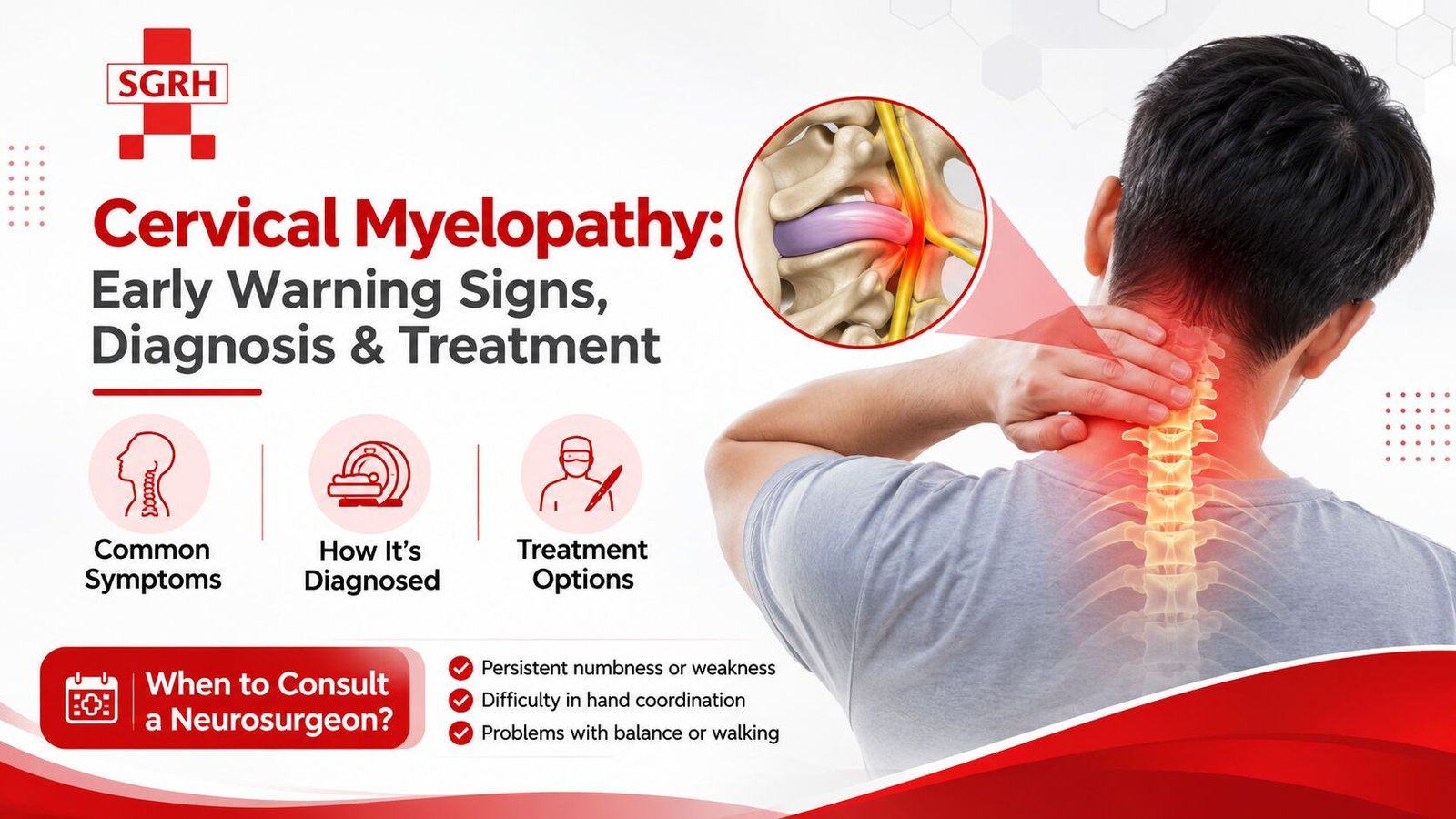
Cervical Myelopathy: Early Warning Signs, Diagnosis and Treatment Options

Experiencing persistent neck pain, numbness in your hands, difficulty holding objects, or problems maintaining balance while walking? These symptoms may sometimes indicate more than a routine neck problem.

One possible underlying condition is cervical myelopathy, a neurological condition that develops when the spinal cord in the neck becomes compressed.

Cervical myelopathy can affect movement, coordination, muscle strength, and everyday activities. Early recognition and appropriate medical evaluation are important because untreated spinal cord compression may lead to progressive neurological problems.

If you are looking for cervical myelopathy treatment in Delhi, understanding its symptoms, causes, diagnostic procedures, and available treatment options can help you make informed healthcare decisions.

In this guide, Dr. Shrey Jain, Spine and Neurosurgeon, explains the important aspects of cervical myelopathy and when specialist consultation may be necessary.

What Is Cervical Myelopathy?

Cervical myelopathy is a condition in which the spinal cord becomes compressed within the cervical spine, which is the neck region of the backbone.

The cervical spine consists of seven vertebrae that protect the spinal cord and support head and neck movement.

Over time, age-related changes, disc degeneration, bone spurs, or other spinal abnormalities may reduce the available space within the spinal canal. This can put pressure on the spinal cord and interfere with the transmission of nerve signals between the brain and the rest of the body.

The most common form is called degenerative cervical myelopathy (DCM), which generally develops due to age-related changes in the cervical spine.

Unlike ordinary neck pain, cervical myelopathy can affect both the upper and lower limbs because the spinal cord carries nerve signals to different parts of the body.

Common Symptoms of Cervical Myelopathy

The symptoms of cervical myelopathy may develop gradually and become more noticeable over time. Some patients initially experience mild discomfort, while others develop problems with movement and coordination.

Here are some important warning signs.

1. Numbness and Tingling in Hands

One of the common symptoms is numbness, tingling, or a pins-and-needles sensation in the fingers, hands, or arms.

Patients may notice reduced sensation while holding objects or performing routine activities.

2. Difficulty Holding Objects

Spinal cord compression can affect hand coordination and fine motor skills.

You may experience:

  • Difficulty buttoning shirts.
  • Trouble holding a pen.
  • Frequently dropping objects.
  • Difficulty typing or using a mobile phone.
  • Reduced finger coordination.

These changes should not be ignored, particularly when they are progressively worsening.

3. Balance Problems While Walking

Cervical myelopathy can affect the nerve signals responsible for movement and coordination.

Patients may experience:

  • Unsteady walking.
  • Frequent stumbling.
  • Difficulty maintaining balance.
  • Stiffness or weakness in the legs.
  • Increased risk of falling.

4. Neck Pain and Stiffness

Some patients experience persistent neck pain, stiffness, or restricted neck movement.

However, it is important to understand that cervical myelopathy can also occur without significant neck pain.

5. Weakness in Arms and Legs

Compression of the spinal cord can interfere with normal muscle function.

Patients may notice weakness in their hands, arms, or legs, making everyday activities more difficult.

6. Changes in Bladder or Bowel Function

In more advanced cases, spinal cord compression may affect bladder or bowel function.

New difficulty passing urine, loss of bladder or bowel control, or other sudden neurological changes require urgent medical assessment.

What Causes Cervical Myelopathy?

Several conditions can contribute to cervical spinal cord compression.

1. Cervical Spondylosis

Cervical spondylosis refers to age-related wear and tear affecting the bones, discs, and joints of the neck.

These changes may cause narrowing of the spinal canal and put pressure on the spinal cord.

2. Herniated Cervical Disc

The discs between the cervical vertebrae act as cushions.

When a disc bulges or herniates, it may press against nearby nerve structures or the spinal cord, depending on its location and severity.

3. Bone Spurs

Bone spurs, also known as osteophytes, are bony growths that may develop as part of degenerative changes.

When these growths narrow the spinal canal, they can contribute to spinal cord compression.

4. Spinal Canal Stenosis

Cervical spinal stenosis occurs when the spinal canal becomes narrower than normal.

This reduced space may place pressure on the spinal cord and cause neurological symptoms.

5. Previous Neck Injury

Certain traumatic injuries involving the cervical spine can damage spinal structures or cause compression of the spinal cord.

6. Other Medical Conditions

Less commonly, tumors, inflammatory conditions, or congenital narrowing of the spinal canal may contribute to cervical myelopathy.

How Is Cervical Myelopathy Diagnosed?

Accurate diagnosis is essential for determining the severity of spinal cord compression and selecting an appropriate treatment approach.

A spine specialist or neurosurgeon may recommend the following assessments.

1. Clinical and Neurological Examination

The doctor evaluates the patient’s symptoms, medical history, muscle strength, reflexes, sensation, and coordination.

The examination may also include assessing walking patterns, balance, and hand movements.

2. MRI of the Cervical Spine

MRI is one of the most important investigations for evaluating cervical myelopathy.

It helps identify:

  • Spinal cord compression.
  • Herniated cervical discs.
  • Narrowing of the spinal canal.
  • Degenerative changes.
  • Changes within the spinal cord.

MRI findings are interpreted alongside the patient’s symptoms and neurological examination.

3. CT Scan

A CT scan provides detailed images of the bones and can help identify bone spurs, structural abnormalities, and other changes affecting the cervical spine.

4. X-Ray

Cervical spine X-rays can help evaluate spinal alignment, vertebral changes, and certain structural abnormalities.

The doctor determines which investigations are necessary based on the individual patient’s condition.

Cervical Myelopathy Treatment Options

Treatment depends on the degree of spinal cord compression, neurological symptoms, imaging findings, and the patient’s overall health.

Not every patient requires immediate surgery. However, progressive neurological symptoms require timely specialist assessment.

1. Non-Surgical Treatment

In selected patients with mild symptoms, a specialist may consider non-surgical management and close clinical monitoring.

Depending on the diagnosis, treatment may involve:

  • Prescribed medications for symptom management.
  • Supervised physiotherapy.
  • Activity modification.
  • Rehabilitation.
  • Regular neurological assessments.

It is important to understand that non-surgical treatment may help manage symptoms, but it does not necessarily relieve the underlying spinal cord compression.

Patients should avoid self-prescribing medication or performing aggressive neck exercises without medical guidance.

2. Cervical Spine Surgery

When spinal cord compression is significant, neurological symptoms are progressing, or the patient has moderate to severe myelopathy, surgery may be recommended.

The primary objective is to relieve pressure on the spinal cord and prevent further neurological deterioration.

Depending on the patient’s condition, surgical options may include:

Anterior Cervical Discectomy and Fusion (ACDF):

This procedure involves removing the problematic disc through an approach from the front of the neck. The affected level is then stabilised using an appropriate fusion technique.

Cervical Laminectomy:

This procedure involves removing part of the vertebral bone at the back of the spine to create more space for the spinal cord.

Cervical Laminoplasty:

This procedure involves reshaping or opening the lamina to increase the available space within the spinal canal while preserving some of the natural spinal structures.

Cervical Decompression and Fusion:

In selected cases, decompression may be combined with spinal fusion to relieve pressure and maintain spinal stability.

The most appropriate procedure depends on the number of affected levels, spinal alignment, location of compression, and other clinical factors.

Is Cervical Myelopathy a Serious Condition?

Yes. Cervical myelopathy can become serious if spinal cord compression continues to progress.

Without appropriate evaluation and treatment, patients may experience:

  • Increasing muscle weakness.
  • Persistent numbness.
  • Difficulty walking.
  • Reduced hand coordination.
  • Frequent falls.
  • Permanent neurological impairment.

The severity and progression vary between individuals.

Early specialist assessment can help identify the condition and determine whether monitoring, conservative management, or surgery is appropriate.

Can Cervical Myelopathy Be Prevented?

Not all cases of cervical myelopathy can be prevented, particularly those associated with age-related spinal degeneration.

However, maintaining general spinal health and avoiding unnecessary neck strain may help support neck function.

Some useful practices include:

  • Maintain a comfortable posture while working.
  • Take regular breaks from prolonged screen use.
  • Avoid sudden or forceful neck movements.
  • Maintain appropriate physical activity.
  • Follow medical advice for existing neck conditions.
  • Seek medical assessment for persistent numbness, weakness, or balance problems.

These measures do not guarantee prevention of spinal cord compression.

When Should You Consult a Neurosurgeon?

You should consider consulting a spine specialist or neurosurgeon if you experience persistent neck discomfort accompanied by numbness, hand weakness, difficulty walking, or reduced coordination.

An early assessment becomes particularly important when symptoms are progressively worsening.

Seek urgent medical attention if you develop sudden or rapidly worsening limb weakness, new walking difficulties, or changes in bladder or bowel function.

A neurosurgical consultation helps determine whether the symptoms are related to cervical myelopathy or another neurological or spinal condition.

Consult Dr. Shrey Jain for Spine and Neurosurgical Evaluation in Delhi

Choosing the right specialist is an important part of managing cervical spine conditions.

Dr. Shrey Jain is a Spine and Neurosurgeon in New Delhi with experience across various areas of brain and spine surgery.

His areas of practice include:

  • Spine surgery.
  • Brain surgery.
  • Minimally invasive neurosurgery.
  • Endoscopic spine procedures.
  • Neurovascular intervention.
  • Functional neurosurgery.

Dr. Shrey Jain focuses on understanding each patient’s condition and evaluating appropriate treatment options based on clinical findings and diagnostic investigations.

If you are experiencing symptoms associated with cervical spinal cord compression, a specialist consultation can help you understand your diagnosis and available treatment approaches.

Book Your Consultation with Dr. Shrey Jain

Website: https://drshreyjain.com/

Phone: +91-8448715518

Location: Sir Ganga Ram Hospital, Old Rajinder Nagar, New Delhi.

Frequently Asked Questions (FAQs)

1. What is the difference between cervical spondylosis and cervical myelopathy?

Cervical spondylosis refers to age-related degenerative changes in the neck. Cervical myelopathy develops when spinal cord compression occurs, often due to these degenerative changes.

2. Can cervical myelopathy cause difficulty walking?

Yes. Compression of the cervical spinal cord can affect the nerve pathways responsible for balance, coordination, and movement, resulting in unsteady walking or difficulty maintaining balance.

3. Is surgery necessary for cervical myelopathy?

Not every patient requires surgery. Treatment depends on symptom severity, neurological findings, and MRI results. Surgery is often considered for moderate to severe or progressive cases to relieve spinal cord compression.

4. Which scan is best for diagnosing cervical myelopathy?

MRI of the cervical spine is generally the preferred imaging investigation because it helps visualize the spinal cord, discs, and surrounding soft tissues.

5. Can cervical myelopathy cause hand weakness?

Yes. Spinal cord compression can affect hand strength, coordination, and fine motor skills. Patients may experience difficulty gripping objects or performing routine tasks.

6. Can cervical myelopathy become permanent?

Severe or prolonged spinal cord compression can cause lasting neurological impairment. Early diagnosis and appropriate treatment may help prevent further deterioration, although complete recovery cannot be guaranteed.

7. Which doctor treats cervical myelopathy in Delhi?

A qualified spine surgeon or neurosurgeon can evaluate cervical myelopathy and recommend appropriate treatment based on the patient’s symptoms, examination, and imaging findings.

Conclusion

Cervical myelopathy is an important spinal condition that should not be confused with ordinary neck pain or stiffness. Symptoms such as hand numbness, muscle weakness, poor coordination, and difficulty walking may indicate spinal cord compression.

Recognising these warning signs and seeking timely specialist evaluation can make an important difference in treatment planning.

If you are experiencing symptoms of cervical myelopathy, consult a qualified spine specialist to understand the underlying cause and available treatment options.
Brain Surgeon Specialist in Delhi: Expert Brain Care with Dr. Shrey Jain

The brain controls essential functions such as movement, memory, speech, sensation, coordination, and decision-making. When a condition affects the brain or the surrounding structures, timely diagnosis and specialist medical care are important. For patients and families searching for a brain surgeon specialist in Delhi, understanding the available treatment options can help them make informed decisions about their healthcare.

Dr. Shrey Jain is a neurosurgeon associated with Sir Ganga Ram Hospital in New Delhi. His clinical interests include brain and spine surgery, endoscopic neurosurgery, neuro-oncology, vascular neurosurgery, and functional neurosurgery. His approach focuses on evaluating each patient’s condition and determining an appropriate treatment plan based on the diagnosis and individual needs.

What Does a Brain Surgeon Specialist Do?

A brain surgeon, also known as a neurosurgeon, is a medical specialist trained to evaluate and treat conditions affecting the brain, spinal cord, and nervous system. Depending on the diagnosis, treatment may involve monitoring, medication, other non-surgical approaches, or a surgical procedure.

A neurosurgeon may assess conditions such as:

  • Brain tumours and other abnormal growths
  • Brain haemorrhage and certain blood vessel abnormalities
  • Head injuries requiring specialist assessment
  • Hydrocephalus, a condition involving excess cerebrospinal fluid in the brain
  • Selected cases of epilepsy that may benefit from surgery
  • Certain movement disorders that may be considered for functional neurosurgery
  • Other structural conditions affecting the brain and nervous system

Not every neurological condition requires an operation. A specialist evaluation helps determine whether surgery is necessary and which treatment options are appropriate.

When Should You Consult a Brain Surgeon in Delhi?

A consultation with a neurosurgeon may be recommended when symptoms, examination findings, or imaging reports suggest a condition that may require neurosurgical assessment.

Consider seeking medical advice if you experience:

  • Persistent or progressively worsening headaches, particularly with other neurological symptoms
  • Repeated seizures or a newly diagnosed seizure disorder
  • Weakness, numbness, or changes in coordination
  • Problems with speech, vision, balance, or movement
  • Confusion or changes in alertness
  • A brain lesion or tumour identified on an MRI or CT scan
  • Symptoms following a significant head injury
  • A diagnosed brain aneurysm or another abnormality of the brain’s blood vessels

Seek emergency medical care immediately for a sudden, unusually severe headache, new weakness on one side of the body, sudden difficulty speaking, loss of consciousness, or a seizure lasting five minutes or longer. Do not wait for a routine appointment when symptoms may indicate a medical emergency.

Brain Conditions That May Require Neurosurgical Treatment

1. Brain Tumours

Brain tumours can be benign or malignant and may develop in different areas of the brain or nearby structures. Their effects depend on factors such as size, location, growth pattern, and pressure on surrounding tissue.

Evaluation may include neurological examination and MRI or other imaging tests. Depending on the type and location of the tumour, treatment may involve observation, surgery, radiation therapy, medication, or a combination of approaches.

When surgery is recommended, the neurosurgeon considers the safest suitable method for obtaining tissue for diagnosis, removing as much of the tumour as appropriate, or relieving pressure on the brain.

2. Brain Aneurysms and Vascular Abnormalities

A brain aneurysm is a weakened area of a blood vessel that can bulge outward. Some aneurysms remain unruptured, while a ruptured aneurysm can cause life-threatening bleeding. Other vascular conditions, including arteriovenous malformations (AVMs), may also require specialist assessment.

Management depends on the abnormality’s size, location, symptoms, rupture risk, and the patient’s overall health. Options may include monitoring, endovascular treatment, or surgery in selected cases.

A sudden severe headache, particularly when accompanied by vomiting, neck stiffness, fainting, or neurological changes, requires emergency assessment.

3. Head Injuries

Head injuries range from mild trauma to serious conditions involving bleeding, swelling, skull fractures, or damage to brain tissue. Some injuries require observation, while others need urgent intervention.

A neurosurgical assessment may be necessary when imaging reveals a significant abnormality or the patient develops neurological symptoms. Following a serious head injury, increasing drowsiness, repeated vomiting, worsening headache, seizures, or confusion should be treated as warning signs.

4. Hydrocephalus

Hydrocephalus occurs when cerebrospinal fluid builds up in the brain’s fluid-filled spaces. This can increase pressure and affect brain function.

Treatment depends on the underlying cause and may include a procedure to divert fluid, such as shunt surgery, or an endoscopic procedure in selected patients. Early diagnosis and appropriate management are important to reduce the risk of complications.

5. Epilepsy and Selected Movement Disorders

Some people with epilepsy continue to experience seizures despite appropriate medication. In carefully selected cases, a specialist team may evaluate whether epilepsy surgery could help.

Functional neurosurgery may also be considered for certain movement disorders. Procedures such as deep brain stimulation are suitable only for specific diagnoses and require detailed assessment by the relevant specialists.

The choice of treatment depends on the patient’s symptoms, test results, previous treatment, and expected benefits and risks.

Advanced Brain Surgery and Minimally Invasive Techniques

Modern neurosurgery may use detailed imaging, microsurgical methods, endoscopic techniques, and other specialised tools to help surgeons plan and perform procedures.

Depending on the condition, the available approaches may include:

  • Microsurgical techniques: Used in selected procedures requiring detailed visualisation of delicate structures.
  • Endoscopic neurosurgery: Uses a small camera and specialised instruments for appropriate conditions and anatomical locations.
  • Skull base surgery: Addresses selected conditions involving complex areas at the base of the skull.
  • Neurovascular procedures: Treat certain abnormalities involving blood vessels in and around the brain.
  • Functional neurosurgery: Includes procedures for selected movement disorders and other specific neurological conditions.

Minimally invasive approaches are not suitable for every patient. The best technique depends on the diagnosis, location of the problem, anatomy, and clinical circumstances. No surgical method can guarantee a particular outcome, and every procedure carries potential risks.

How to Choose a Brain Surgeon Specialist in Delhi?

Choosing a neurosurgeon is an important decision for patients and their families. Consider the following factors before proceeding with treatment:

1. Relevant qualifications and training: Check the doctor’s medical qualifications, specialist training, and current professional role.

2. Experience relevant to your diagnosis: Brain tumours, vascular conditions, head injuries, and movement disorders may require different areas of expertise.

3. Clear explanation of treatment options: The specialist should explain the diagnosis, whether surgery is necessary, the expected benefits, potential risks, and available alternatives.

4. Appropriate hospital facilities: Complex neurosurgical care may require advanced imaging, anaesthesia, intensive care, and multidisciplinary support.

5. Follow-up and rehabilitation planning: Ask about recovery, follow-up visits, rehabilitation needs, and warning signs to monitor after treatment.

Patients can also consider obtaining a second opinion before a planned, non-emergency brain surgery if they would like to understand their options more fully.

Consult Dr. Shrey Jain for Brain and Neurosurgical Evaluation in Delhi

Dr. Shrey Jain is an Associate Consultant in Neurosurgery at Sir Ganga Ram Hospital, New Delhi. His listed clinical interests include endoscopic neurosurgery, functional neurosurgery, neuro-oncology, vascular neurosurgery, and minimally invasive spine surgery.

Patients seeking a brain surgeon specialist in Delhi can arrange a consultation to discuss their symptoms, diagnosis, imaging findings, and potential treatment options. The appropriate plan will depend on the specific condition and a detailed medical evaluation.

For your appointment, bring any available MRI or CT scans, reports, previous medical records, a list of current medicines, and details of previous treatment. These documents can help the specialist understand your medical history and assess the next steps.

Frequently Asked Questions (FAQs)

1. Who is a brain surgeon specialist?

A brain surgeon specialist is a neurosurgeon trained to diagnose and treat conditions affecting the brain, spinal cord, and nervous system. Treatment may involve surgery or non-surgical management, depending on the diagnosis.

2. How do I find a brain surgeon specialist in Delhi?

Review the neurosurgeon’s qualifications, relevant clinical interests, hospital affiliation, and experience with the condition being evaluated. Discuss the diagnosis, treatment choices, risks, and expected follow-up during your consultation.

3. Does every brain tumour require surgery?

No. Some brain tumours may be monitored, while others require surgery, radiation therapy, medication, or combined treatment. The decision depends on the tumour’s type, size, location, growth, symptoms, and other clinical factors.

4. When is brain surgery necessary?

Brain surgery may be recommended for selected tumours, bleeding or pressure within the skull, certain vascular abnormalities, hydrocephalus, and other conditions. A neurosurgeon determines whether surgery is appropriate after reviewing the clinical findings and investigations.

5. Is minimally invasive brain surgery possible?

Minimally invasive or endoscopic techniques may be suitable for certain conditions. Their suitability depends on the location and nature of the problem, the patient’s health, and the expected benefits and risks.

6. What tests may be required before brain surgery?

Depending on the condition, investigations may include MRI, CT, blood tests, neurological examination, vascular imaging, or other specialised tests. Not every patient needs every test.

7. How long does recovery from brain surgery take?

Recovery varies considerably according to the condition, procedure, the patient’s overall health, and whether complications occur. The treating team can provide guidance on hospital stay, activity restrictions, rehabilitation, and follow-up.

8. Should I seek a second opinion before brain surgery?

For planned, non-emergency surgery, a second opinion can help you understand the diagnosis, alternatives, potential risks, and expected outcomes. In an emergency, however, do not delay urgent treatment to obtain another opinion.

9. Where can I consult Dr. Shrey Jain in Delhi?

Dr. Shrey Jain is listed as an Associate Consultant in Neurosurgery at Sir Ganga Ram Hospital, New Delhi. Contact the hospital or use the official doctor website to confirm appointment availability and current consultation details.

10. How can I prepare for a neurosurgery consultation?

Bring your scan images and reports, prescriptions, previous medical records, and a list of symptoms and when they began. Prepare questions about the diagnosis, treatment alternatives, risks, recovery, and follow-up.

Conclusion

Finding the right brain surgeon specialist in Delhi starts with understanding the condition and obtaining an appropriate medical evaluation. Brain tumours, vascular abnormalities, hydrocephalus, head injuries, and selected functional neurological conditions may require neurosurgical expertise, but treatment must be tailored to each patient.

Dr. Shrey Jain’s neurosurgical practice at Sir Ganga Ram Hospital provides an option for patients seeking specialist evaluation for brain and spine conditions. A consultation can help clarify the diagnosis and identify suitable next steps.

Spine Surgery Neurosurgeon in Delhi: Advanced Spine Care with Dr. Shrey Jain

Back pain, neck pain, numbness, tingling, and difficulty walking can sometimes indicate an underlying spinal condition that requires specialist evaluation. While many spinal problems improve with medication, physiotherapy, and other non-surgical treatments, some conditions may require surgery to relieve pressure on nerves, stabilise the spine, or treat structural abnormalities.

If you are searching for a spine surgery neurosurgeon in Delhi, choosing a specialist who can evaluate your condition and explain both surgical and non-surgical options is an important step.

Dr. Shrey Jain is a spine and neurosurgeon associated with Sir Ganga Ram Hospital in New Delhi. His clinical interests include minimally invasive spine surgery and other neurosurgical procedures. His approach emphasises evaluating each patient’s condition before deciding on an appropriate treatment strategy.

What Is Spine Surgery?

Spine surgery refers to surgical procedures performed to treat problems affecting the bones, discs, joints, nerves, or other structures of the spine. Depending on the diagnosis, surgery may aim to relieve nerve compression, stabilise an unstable spinal segment, remove a tumour, or correct a structural abnormality.

The spine protects the spinal cord and supports the body’s movement. Problems involving the spinal nerves or spinal cord can affect pain levels, muscle strength, sensation, balance, and mobility.

A spine surgery neurosurgeon evaluates these structures and determines whether an operation is likely to provide meaningful benefits.

Importantly, not every patient with back pain or a slipped disc needs surgery. Treatment should be based on symptoms, physical examination, imaging findings, and the patient’s overall health.

When Should You Consult a Spine Surgery Neurosurgeon in Delhi?

You may consider consulting a spine specialist if you experience persistent symptoms or have been diagnosed with a spinal condition.

Common reasons for specialist evaluation include:

  • Back pain that persists despite appropriate treatment.
  • Neck pain accompanied by pain, tingling, or numbness in the arms.
  • Lower back pain radiating into the buttocks or legs.
  • Muscle weakness affecting the arms, hands, legs, or feet.
  • Difficulty walking or maintaining balance.
  • A diagnosed herniated disc or spinal stenosis.
  • Spinal instability or certain spinal deformities.
  • A spinal tumour or other structural abnormality.
  • Symptoms following a spinal injury.

A consultation does not automatically mean surgery will be recommended. The purpose is to identify the underlying cause and understand which treatment options are appropriate.

Seek emergency medical care if you develop new loss of bladder or bowel control, numbness around the groin or saddle area, or rapidly worsening leg weakness, particularly alongside back pain. These symptoms can indicate serious nerve compression and require urgent assessment.

Common Spine Conditions Treated by a Neurosurgeon

Spinal conditions vary in their causes, symptoms, and treatment requirements. Some can be managed conservatively, while others may require surgical intervention.

1. Herniated or Slipped Disc

The spinal discs act as cushions between the vertebrae. A herniated disc occurs when disc material protrudes and may irritate or compress nearby nerves.

Symptoms can include:

  • Lower back or neck pain.
  • Pain radiating into an arm or leg.
  • Tingling or numbness.
  • Muscle weakness in some cases.

Treatment may involve medication, activity modification, physiotherapy, and other conservative measures. Surgery may be considered when symptoms remain disabling despite appropriate treatment or when significant neurological deficits require intervention.

2. Lumbar Spinal Stenosis

Lumbar spinal stenosis occurs when the spaces around the nerves in the lower spine become narrowed. It may cause back pain, leg discomfort, numbness, or heaviness while standing or walking.

Some people find that their symptoms improve when sitting or bending forward. However, similar symptoms can have other causes, so a proper assessment is necessary.

Depending on the severity of nerve compression and its effect on daily activities, treatment may include conservative management or a surgical procedure to decompress the affected nerves.

3. Cervical Spine Disorders

The cervical spine consists of the vertebrae in the neck. Disc degeneration, herniation, or other structural changes may compress nerve roots and cause neck pain, arm pain, numbness, or weakness.

In some cases, compression of the spinal cord can affect hand coordination, walking, and balance. These symptoms should be evaluated promptly by a medical professional.

Treatment depends on the cause and severity of the condition. A neurosurgeon may recommend observation, medication, rehabilitation, or surgery when clinically appropriate.

4. Degenerative Disc Disease

Spinal discs can change with age and everyday mechanical stress. Degenerative changes do not always cause pain, but some people experience persistent discomfort or associated nerve compression.

Management may include exercise-based rehabilitation, appropriate pain management, and lifestyle adjustments. Surgery is considered selectively when symptoms and structural findings support an operative approach.

5. Spondylolisthesis and Spinal Instability

Spondylolisthesis occurs when one vertebra slips relative to another. Depending on its severity, it may contribute to back pain, nerve compression, or difficulty with certain activities.

Treatment depends on the degree of slippage, symptoms, neurological findings, and spinal stability. Some patients can be managed without surgery, while others may require decompression or stabilisation procedures.

6. Spinal Tumours

Tumours can develop in or around the spinal cord, nerve roots, or vertebral structures. Their effects depend on their location, size, type, and growth pattern.

Symptoms may include persistent or progressive pain, weakness, sensory changes, or problems with walking. A suspected spinal tumour requires specialist evaluation and appropriate imaging.

Treatment may involve surgery, monitoring, radiotherapy, or other treatments depending on the tumour’s characteristics and the patient’s overall condition.

7. Spinal Deformities

Conditions involving abnormal spinal curvature or alignment may affect posture, balance, comfort, and movement.

The need for treatment depends on the type and severity of the deformity, the patient’s symptoms, and whether the condition is progressing. Surgery is reserved for selected cases after careful evaluation.

What Is Minimally Invasive Spine Surgery?

Minimally invasive spine surgery uses specialised techniques and instruments to access the affected spinal structures through smaller incisions than those used in many traditional open procedures.

Depending on the condition, the surgeon may use tubular retractors, an endoscope, or other specialised equipment to reach the target area while limiting disruption to surrounding tissues.

Potential advantages in suitable patients may include:

  • Smaller surgical incisions.
  • Less disruption to some surrounding muscles and tissues.
  • Reduced postoperative discomfort in selected cases.
  • Potentially shorter hospital stays.
  • Earlier mobilisation or rehabilitation when clinically appropriate.

These benefits are not guaranteed for every patient. Minimally invasive surgery is not suitable for every spinal condition, and the best technique depends on the anatomy, diagnosis, complexity of the procedure, and the surgeon’s assessment.

Dr. Shrey Jain’s website lists spine surgery and minimally invasive surgical techniques among his areas of neurosurgical care.

Types of Spine Surgery

The procedure recommended depends on which spinal structure is affected and what needs to be corrected.

Discectomy

A discectomy involves removing part of a damaged or herniated disc that is compressing a nerve. It may be considered when symptoms and examination findings indicate that the disc is responsible for significant nerve irritation or compression.

Spinal Decompression

Decompression procedures aim to create more space for compressed nerves or, in selected cases, the spinal cord. The specific technique depends on the cause and location of the narrowing.

Spinal Fusion

Spinal fusion joins two or more vertebrae to provide stability. It may be considered for certain cases of spinal instability, deformity, or other conditions where stabilisation is necessary.

Fusion may involve bone graft material and instrumentation such as screws and rods. It can limit movement at the fused segment and has risks that must be discussed before surgery.

Endoscopic Spine Surgery

Endoscopic spine surgery uses a small camera and specialised instruments to access selected spinal problems. It may be appropriate for certain disc herniations or other conditions, depending on their location and complexity.

Not every patient is a candidate for an endoscopic approach.

Surgery for Spinal Tumours

Surgery for a spinal tumour may aim to obtain tissue for diagnosis, remove as much of the tumour as safely possible, relieve pressure on neural structures, or stabilise the spine. The treatment plan depends on the tumour’s type, location, and relationship to surrounding tissues.

How Does a Neurosurgeon Decide Whether Spine Surgery Is Needed?

A careful assessment helps determine whether surgery is appropriate and which procedure may offer the best balance of benefits and risks.

Step 1: Review of Symptoms and Medical History

The neurosurgeon discusses the location and duration of pain, associated symptoms, previous treatment, medical conditions, and the effect of symptoms on daily activities.

Step 2: Neurological and Physical Examination

The examination may assess muscle strength, sensation, reflexes, walking, balance, and movements relevant to the affected spinal region.

Step 3: Imaging Review

Depending on the condition, MRI, CT, or X-rays may be needed. Imaging findings must be interpreted alongside symptoms and examination results because structural changes can sometimes be present without causing symptoms.

Step 4: Discussion of Treatment Options

The neurosurgeon explains the available options, which may include observation, medication, physiotherapy, other non-surgical treatments, or surgery.

Step 5: Informed Decision-Making

If surgery is recommended, the discussion should cover the intended benefit, potential complications, alternatives, recovery expectations, and likely follow-up requirements.

What Is the Recovery Period After Spine Surgery?

Recovery varies according to the procedure, the underlying condition, the patient’s age and general health, and whether complications occur.

Some patients can begin walking soon after surgery under medical supervision. Others may need a longer hospital stay and a structured rehabilitation programme.

Recovery may involve:

  • Following wound-care and medication instructions.
  • Gradually increasing walking and daily activities.
  • Avoiding movements or lifting restrictions specified by the surgeon.
  • Attending scheduled follow-up appointments.
  • Beginning physiotherapy or rehabilitation when advised.
  • Reporting new or worsening symptoms promptly.

Returning to work, driving, exercise, and heavier physical activity should be based on the surgeon’s advice rather than a fixed timeline.

Why Consider Dr. Shrey Jain for Spine Surgery in Delhi?

When selecting a spine surgery neurosurgeon, patients should consider relevant training, experience with their specific condition, treatment options, hospital facilities, and the quality of communication during consultations.

Dr. Shrey Jain is listed as an Associate Consultant in Neurosurgery at Sir Ganga Ram Hospital, New Delhi. His clinical interests include minimally invasive spine surgery, endoscopic neurosurgery, and other neurosurgical subspecialties.

Patients considering a consultation can discuss their symptoms, existing imaging, previous treatment, and concerns about surgery. The aim should be to understand the diagnosis and identify an appropriate treatment plan rather than assume that an operation is necessary.

During your consultation, consider asking:

  • What is the likely cause of my symptoms?
  • Do my MRI or CT findings explain my symptoms?
  • Are non-surgical treatments still appropriate?
  • What are the expected benefits and risks of the proposed procedure?
  • Are there alternative surgical techniques?
  • What will recovery and rehabilitation involve?

Clear answers to these questions can help you make an informed decision about your care.

How to Prepare for a Spine Surgery Consultation

Before meeting a neurosurgeon, organise the information that may help with the assessment.

  1. Bring previous MRI, CT, or X-ray images and reports.
  2. Carry prescriptions and reports from previous treatments.
  3. Prepare a list of your current medications and relevant medical conditions.
  4. Note when your symptoms started and what makes them better or worse.
  5. Explain whether you have experienced weakness, numbness, balance problems, or changes in bladder or bowel function.
  6. Write down questions about the diagnosis, treatment alternatives, risks, and recovery.

This information can help the specialist understand your condition and discuss appropriate next steps.

Frequently Asked Questions (FAQs)

1. Who should I consult for spine surgery in Delhi?

You may consult a qualified spine surgeon or neurosurgeon when a spinal condition causes persistent symptoms, neurological problems, or requires specialist evaluation. Choose a professional with relevant experience in your diagnosed condition.

2. Does every slipped disc require surgery?

No. Many herniated discs improve with conservative treatment. Surgery may be considered when symptoms remain disabling despite appropriate treatment or when significant or progressive neurological deficits make intervention necessary.

3. When should I consult a neurosurgeon for back pain?

Consider specialist evaluation if your pain persists despite appropriate care, radiates into your arms or legs, is associated with weakness or numbness, or significantly affects walking and daily activities. Emergency symptoms require immediate medical attention.

4. What is minimally invasive spine surgery?

It is a group of surgical techniques that use smaller incisions and specialised instruments to access selected spinal conditions. Suitability depends on the diagnosis, anatomy, and complexity of the procedure.

5. Is spine surgery safe?

All operations carry potential risks, including infection, bleeding, nerve injury, complications related to anaesthesia, and the possibility of incomplete symptom relief or further treatment. The individual risks depend on the procedure and the patient’s health. Discuss these with your surgeon before deciding.

6. How long does it take to recover from spine surgery?

Recovery depends on the operation and the patient’s condition. Some procedures allow relatively early mobilisation, while more complex operations may require a longer recovery and rehabilitation period. Your surgeon can provide guidance based on your treatment plan.

7. Can physiotherapy help avoid spine surgery?

Physiotherapy may help many patients manage pain and improve strength, mobility, and function. However, it cannot replace surgery when a condition requires urgent decompression or stabilisation. Treatment decisions should be made after proper assessment.

8. What should I bring to my neurosurgeon appointment?

Bring your medical history, prescriptions, previous treatment records, and MRI, CT, or X-ray images and reports. Also note your symptoms and any changes in strength, sensation, walking, or bladder and bowel function.

9. Does Dr. Shrey Jain provide minimally invasive spine surgery?

Dr. Shrey Jain’s official website lists spine surgery and minimally invasive surgical techniques among his areas of care. The appropriate procedure and its availability should be discussed directly during consultation.

10. How can I book an appointment with Dr. Shrey Jain in Delhi?

You can contact his official website or enquire through Sir Ganga Ram Hospital, New Delhi, to confirm current consultation availability and appointment arrangements.

Conclusion

Spinal conditions can affect movement, comfort, independence, and quality of life. A detailed assessment by an appropriately qualified specialist can help identify the cause of symptoms and determine whether medication, physiotherapy, observation, or surgery is the most suitable approach.

If you are searching for a spine surgery neurosurgeon in Delhi, Dr. Shrey Jain offers neurosurgical consultation for spine-related conditions, including assessment for appropriate surgical and non-surgical management.

Book a consultation with Dr. Shrey Jain to discuss your symptoms, review your scans, and understand the treatment options available for your spinal condition.

Doctor: Dr. Shrey Jain, Associate Consultant in Neurosurgery
Hospital: Sir Ganga Ram Hospital, New Delhi
Phone: +91 84487 15518
Website: https://drshreyjain.com/

Top Neurosurgeon in New Delhi: Advanced Brain & Spine Care with Dr. Shrey Jain

When facing complex neurological or spinal conditions, finding specialized expertise combined with surgical precision is paramount. The brain and spine serve as the command center of the human body, requiring compassionate, cutting-edge medical attention when disorders arise.

If you or a loved one are seeking comprehensive care, Dr. Shrey Jain stands out as a leading Neurosurgeon in New Delhi. Known for his advanced expertise in minimally invasive neurosurgery and endoscopic spine procedures, Dr. Jain is dedicated to delivering optimal surgical outcomes with faster recovery times.

Why Choose Dr. Shrey Jain for Neurosurgical Care?

Navigating brain and spine treatments requires absolute trust. Dr. Shrey Jain brings years of specialized experience, rigorous clinical training from premier institutes like Kasturba Medical College (Manipal) and Sir Ganga Ram Hospital, and a patient-centric philosophy.

Key Clinical Highlights:

  • Minimally Invasive Techniques: Expertise in endoscopic brain and spine procedures that minimize tissue disruption, reduce post-operative pain, and accelerate recovery.
  • Comprehensive Care Spectrum: Balanced approach encompassing precise surgical interventions, non-surgical management, and dedicated post-operative rehabilitation.
  • Associated with Premier Hospitals: Practicing at renowned medical centers including Sir Ganga Ram Hospital and Sir Ganga Ram City Hospital in Rajinder Nagar, New Delhi.

Specialization & Key Procedures Offered

Dr. Shrey Jain offers state-of-the-art diagnostic evaluations and treatments tailored to each patient’s specific anatomical and clinical profile:

Neurosurgical SpecialtySpecialized Procedures & Conditions Treated
Spine SurgeryMicrodiscectomy, endoscopic spine surgery, lumbar spondylosis, herniated discs, and spinal fusion.
Brain Tumor SurgerySurgical excision of brain tumors, stereotactic radio-surgery guidance, and subdural hematoma management.
Vascular NeurosurgeryMicrovascular clipping, endovascular embolization, and cerebral angioplasty.
Neuro-Trauma & EmergenciesCritical management of extradural hematomas, brain hemorrhages, and traumatic spine injuries.

Patient First Approach: Surgery is only recommended when conservative, non-surgical approaches have been thoroughly evaluated, ensuring patients receive the safest and most effective care strategy.

The Advantages of Minimally Invasive Neurosurgery

Traditional open surgeries often require larger incisions and extended hospital stays. By adopting endoscopic and minimally invasive interventions, Dr. Shrey Jain provides significant clinical advantages:

  1. Smaller Incisions: Preserves surrounding muscle tissue and healthy bone structures.
  2. Reduced Hospital Stay: Patients often return home significantly sooner than with traditional procedures.
  3. Faster Rehabilitation: Allows patients to return to their daily routines and working lives with minimal delay.
  4. Lower Infection Risks: Minimizing surgical exposure lowers the chance of post-operative complications.

Frequently Asked Questions (FAQs)

1. What conditions warrant a consultation with a neurosurgeon?

You should consult a neurosurgeon for persistent neck or back pain radiating to the limbs, chronic unmanageable headaches, unexplained numbness, balance issues, seizures, or diagnosed brain and spinal cord lesions.

2. Is spine surgery always required for back pain and slipped discs?

No. Many spinal conditions can be managed through non-surgical protocols, physical therapy, and lifestyle modifications. Surgical intervention is considered when conservative treatments fail to provide relief or when neurological deficits are present.

3. How do I book an appointment with Dr. Shrey Jain in New Delhi?

You can book an OPD appointment at Sir Ganga Ram Hospital or Sir Ganga Ram City Hospital, Rajinder Nagar, New Delhi, or directly schedule a consultation via the official website contact portal.

Schedule a Consultation with Dr. Shrey Jain

Take the first step toward advanced, compassionate brain and spine care today.

Best Neurosurgeon in Delhi NCR – Advanced Brain & Spine Care by Dr. Shrey Jain

Neurological conditions can affect the brain, spinal cord, nerves, movement, memory, balance, and everyday quality of life. When symptoms require specialist evaluation or surgery, choosing an experienced neurosurgeon is an important decision.

For patients searching for the best neurosurgeon in Delhi NCR, Dr. Shrey Jain provides specialized care for a wide range of brain and spine conditions, with a focus on advanced neurosurgical techniques, individualized treatment planning, and patient-centered care.

Who Is a Neurosurgeon?

A neurosurgeon is a medical specialist trained to diagnose and treat disorders affecting the brain, spine, spinal cord, and peripheral nerves. Neurosurgical treatment may include surgery as well as non-surgical management, depending on the patient’s condition.

Not every neurological problem requires surgery. A detailed evaluation and appropriate imaging help determine whether medication, physiotherapy, observation, minimally invasive treatment, or surgery is the most suitable approach.

Why Choose Dr. Shrey Jain for Neurosurgical Care?

Dr. Shrey Jain is a Spine and Neurosurgeon who provides care across several areas of neurosurgery. His practice includes brain surgery, spine surgery, neurovascular intervention, functional neurosurgery, and non-surgical management.

1. Brain and Spine Expertise

Brain and spinal disorders can be complex and may require highly precise diagnosis and treatment. Dr. Jain’s areas of practice include conditions requiring specialized brain and spine surgical care.

2. Minimally Invasive Approaches

Where clinically appropriate, minimally invasive techniques can help reduce tissue disruption and may support a smoother recovery. The choice of technique depends on the patient’s diagnosis, anatomy, and overall health.

3. Comprehensive Neurosurgical Care

Neurosurgery covers much more than brain tumor surgery. Dr. Jain’s listed services include:

  • Brain surgery
  • Spine surgery
  • Neurovascular intervention
  • Functional neurosurgery
  • Non-surgical management
  • Minimally invasive neurosurgical procedures
  • Complex brain and spine conditions

Conditions Treated by a Neurosurgeon

A neurosurgical consultation may be recommended for conditions such as:

Brain Tumors

Brain tumors require careful evaluation to understand their location, size, type, and relationship with important areas of the brain. Depending on the individual case, treatment may involve surgery, observation, radiation therapy, or other multidisciplinary care.

Spine Disorders

Conditions affecting the spine can cause back pain, neck pain, weakness, numbness, or difficulty walking. Depending on the underlying cause, treatment may include conservative management or procedures such as spinal decompression or fusion.

Brain Aneurysms and Neurovascular Conditions

Certain blood-vessel disorders of the brain, including aneurysms, can require specialized neurovascular assessment and treatment. Early evaluation is particularly important when symptoms suggest a serious neurological problem.

Epilepsy

Some patients with epilepsy may continue to experience seizures despite appropriate medication. In selected cases, specialist evaluation may determine whether epilepsy surgery or other advanced treatment options could be considered.

Movement Disorders

Functional neurosurgery can play a role in the management of selected movement disorders. Advanced procedures such as Deep Brain Stimulation (DBS) may be considered for appropriate patients after detailed evaluation.

Head and Spine Injuries

Trauma involving the brain or spine can sometimes require urgent neurosurgical assessment. Severe headache, loss of consciousness, weakness, seizures, confusion, or changes in consciousness following an injury require immediate medical attention.

When Should You See a Neurosurgeon?

You may need a neurosurgical consultation if you experience:

  • Persistent or severe headaches
  • Progressive back or neck pain
  • Numbness or weakness in the arms or legs
  • Difficulty walking or maintaining balance
  • Recurrent seizures
  • Symptoms caused by a diagnosed brain or spine condition
  • Persistent symptoms despite conservative treatment
  • A diagnosed brain tumor, aneurysm, or spinal disorder
  • Neurological symptoms following significant trauma

A consultation does not automatically mean that surgery will be required. The purpose of the evaluation is to identify the cause of the symptoms and determine the most appropriate treatment.

Advanced Neurosurgery for Brain and Spine Conditions

Modern neurosurgery combines detailed imaging, surgical planning, microsurgical techniques, minimally invasive procedures, and intraoperative technologies to improve precision.

Depending on the condition, treatment may involve techniques such as:

  • Minimally invasive spine surgery
  • Brain tumor surgery
  • Endoscopic neurosurgery
  • Skull base procedures
  • Neurovascular procedures
  • Functional neurosurgery
  • Deep Brain Stimulation
  • Complex spinal procedures

The appropriate technique is selected according to the patient’s diagnosis rather than using the same approach for every patient.

How to Choose the Best Neurosurgeon in Delhi NCR?

When choosing a neurosurgeon, patients should consider more than online rankings or advertisements. Important factors include:

Relevant expertise: Choose a specialist experienced in treating your specific neurological condition.

Treatment options: Ask whether both surgical and non-surgical options have been considered.

Hospital facilities: Complex neurosurgical procedures require appropriate operating-room, imaging, anesthesia, and critical-care support.

Clear communication: Your neurosurgeon should explain the diagnosis, available treatment options, potential benefits, risks, and expected recovery.

Personalized treatment: Every brain and spine condition is different. Treatment should be based on your clinical findings and imaging rather than a standard approach.

Consult Dr. Shrey Jain – Best Neurosurgeon in Delhi NCR

If you are looking for a best neurosurgeon in Delhi NCR for a brain, spine, neurovascular, or functional neurological condition, Dr. Shrey Jain provides specialized neurosurgical consultation and treatment.

His practice focuses on advanced brain and spine care, minimally invasive approaches where appropriate, and individualized treatment planning.

Dr. Shrey Jain is associated with Sir Ganga Ram Hospital, New Delhi, and his listed practice location is in Old Rajinder Nagar, New Delhi.

Frequently Asked Questions

1. Who is the best neurosurgeon in Delhi NCR?

The right neurosurgeon depends on the patient’s specific condition and treatment requirements. Patients should consider the surgeon’s expertise in their particular brain, spine, neurovascular, or functional neurosurgical problem.

2. Does seeing a neurosurgeon mean I need surgery?

No. A neurosurgical consultation may result in medication, physiotherapy, observation, lifestyle changes, further diagnostic testing, or surgery depending on the condition.

3. What conditions does Dr. Shrey Jain treat?

Dr. Shrey Jain’s listed areas include brain surgery, spine surgery, neurovascular intervention, functional neurosurgery, and non-surgical management.

4. Does Dr. Shrey Jain perform spine surgery?

Yes. Spine surgery is one of the major services listed on his website, alongside brain surgery and other neurosurgical treatments.

5. When should I consult a neurosurgeon for back pain?

If back or neck pain is persistent, associated with weakness or numbness, affects walking, or does not improve with appropriate conservative treatment, a specialist evaluation may be appropriate.

6. What should I bring to my neurosurgical consultation?

Bring previous medical records, MRI or CT scans and reports, prescriptions, laboratory reports, and a list of current medications. This can help the neurosurgeon understand your medical history and make a more informed assessment.

Conclusion

Finding the best neurosurgeon in Delhi NCR should be based on expertise, experience with your specific condition, treatment options, hospital support, and clear communication.

For patients with brain, spine, neurovascular, or functional neurosurgical conditions, Dr. Shrey Jain offers specialized evaluation and treatment with a focus on individualized care and advanced neurosurgical approaches.

If you are experiencing persistent neurological symptoms or have been diagnosed with a brain or spine condition, schedule a consultation to understand your treatment options.

Dr. Shrey Jain – Spine and Neurosurgeon
Delhi NCR | New Delhi

Pediatric Neurosurgeon in Delhi: Expert Treatment for Brain & Spine Conditions in Children

Neurological problems in children require specialized evaluation because a child’s brain and nervous system are still developing. Parents looking for a Pediatric Neurosurgeon in Delhi should seek timely specialist assessment when a child shows symptoms that may indicate a neurological or neurosurgical condition.

Dr. Shrey Jain provides neurosurgical consultation for neurological conditions and can help families understand the evaluation and treatment options available for children with brain and spine-related problems.

What Does a Pediatric Neurosurgeon Treat?

A pediatric neurosurgeon specializes in surgical and related care for neurological conditions affecting infants, children, and adolescents.

Depending on the child’s condition, evaluation may involve disorders affecting the brain, spine, spinal cord, or nerves.

Common Pediatric Neurosurgical Conditions

Children may require neurosurgical assessment for conditions such as hydrocephalus, congenital brain abnormalities, spinal disorders, certain brain tumors, vascular abnormalities, and other neurological problems.

The symptoms can vary depending on the child’s age and the underlying condition.

Symptoms Parents Should Not Ignore

Some neurological symptoms that may require medical evaluation include persistent headaches, repeated vomiting without an obvious cause, seizures, developmental concerns, problems with walking or coordination, unusual changes in behavior, weakness, or changes in vision.

In infants, parents may notice unusual head growth, feeding difficulties, excessive sleepiness, or other developmental changes.

These symptoms can have many different causes, so proper medical evaluation is important before reaching conclusions.

Diagnosis of Pediatric Neurological Conditions

A child’s evaluation may include a detailed medical history, physical and neurological examination, and appropriate imaging studies.

Depending on the suspected condition, doctors may recommend MRI, CT scans, ultrasound in selected infants, or other diagnostic investigations.

Pediatric Brain Tumor Treatment

Brain tumors in children require careful evaluation by an appropriate multidisciplinary medical team. Treatment depends on the tumor’s type, size, location, and biological characteristics.

Surgery may be recommended when removal or tissue diagnosis is necessary. Depending on the diagnosis, additional treatments may be provided by pediatric oncology or other specialists.

Pediatric Spine Conditions

Some children can develop congenital or acquired spinal conditions. Symptoms may include back deformity, weakness, difficulty walking, pain, or changes in bladder or bowel function.

Early specialist assessment can help determine whether observation, rehabilitation, medical treatment, or surgery is appropriate.

Choosing a Pediatric Neurosurgeon in Delhi

When selecting a Pediatric Neurosurgeon in Delhi, parents should consider the child’s specific diagnosis, the surgeon’s relevant experience, diagnostic facilities, and access to multidisciplinary medical care.

A specialist consultation can help parents understand the condition and available treatment options before making healthcare decisions.

Importance of Early Specialist Evaluation

Children may not always be able to clearly describe neurological symptoms. Parents and caregivers should pay attention to persistent or unusual changes in behavior, movement, development, or physical health.

Early evaluation does not necessarily mean that surgery will be required. It allows the underlying problem to be assessed and an appropriate management plan to be considered.

Conclusion

A Pediatric Neurosurgeon in Delhi can play an important role in evaluating children with brain, spine, and nervous system conditions. Early diagnosis and individualized treatment planning can help families understand the condition and available care options.

Dr. Shrey Jain provides specialist neurosurgical consultation and evaluation for patients with neurological and neurosurgical conditions, helping families understand appropriate next steps for their child’s care.

Spine Surgery & Non-Surgical Spine Treatment in Delhi: Which Treatment Is Right for You?

Back and neck problems are common and can affect mobility, work, sleep, and everyday activities. While some spinal conditions require surgery, many patients may initially be treated with non-surgical approaches. Understanding the available options is important when looking for Non-Surgical Spine Treatment in Delhi.

Dr. Shrey Jain provides neurosurgical evaluation for patients with spine and neurological conditions. The appropriate treatment depends on the cause of pain, severity of symptoms, neurological findings, and results of diagnostic investigations.

Common Causes of Spine Problems

Spinal symptoms can occur due to several conditions, including slipped or herniated discs, degenerative disc disease, spinal stenosis, nerve compression, injuries, and age-related changes.

Patients may experience back pain, neck pain, stiffness, numbness, tingling, or weakness in the arms or legs.

What Is Non-Surgical Spine Treatment?

Non-surgical treatment refers to approaches used to manage spinal symptoms without an operation. Depending on the diagnosis, treatment may include prescribed medication, physiotherapy, activity modification, rehabilitation, posture correction, or other specialist-recommended measures.

Not every patient needs surgery, and the decision should be based on the underlying condition rather than pain alone.

When Can Non-Surgical Treatment Help?

Patients with mild to moderate symptoms and without serious neurological deficits may sometimes improve with conservative treatment. The duration and type of treatment depend on the specific diagnosis.

A specialist may recommend non-surgical management first and monitor the patient’s progress before considering an operation.

When Is Spine Surgery Considered?

Surgery may become an option when symptoms do not improve with appropriate conservative treatment or when there is significant nerve compression, progressive neurological weakness, spinal instability, severe stenosis, or another condition requiring surgical management.

The decision should be made after a detailed clinical assessment and review of relevant imaging.

Spine Surgery Neurosurgeon in Delhi

A Spine Surgery Neurosurgeon in Delhi evaluates conditions involving the spine, spinal cord, and nerves. Neurosurgical assessment can be particularly important when symptoms suggest nerve or spinal cord compression.

A specialist may review MRI or other imaging studies together with the patient’s symptoms and neurological examination before recommending treatment.

Spine and Back Specialist in Delhi NCR

Patients searching for a Spine and Back Specialist in Delhi NCR should understand that the best treatment depends on the exact cause of their symptoms. A treatment that works for one spinal condition may not be appropriate for another.

A personalized evaluation helps identify whether conservative treatment, interventional care, rehabilitation, or surgery is appropriate.

Warning Signs That Need Medical Attention

Back or neck pain accompanied by progressive weakness, difficulty walking, loss of bladder or bowel control, severe numbness, or symptoms following significant trauma requires prompt medical evaluation.

Sudden or rapidly worsening neurological symptoms should not be ignored.

Conclusion

Non-Surgical Spine Treatment in Delhi can be an appropriate option for many patients depending on their diagnosis and symptoms. Surgery is not automatically required for every spinal problem, while some conditions may benefit from timely surgical treatment.

Dr. Shrey Jain provides specialist evaluation for patients with spine, back, and neurological conditions and can help determine an appropriate treatment pathway based on individual needs.

Best Neurosurgeon for Brain Tumor in Delhi: Diagnosis, Surgery & Treatment Options

A brain tumor diagnosis can be stressful for patients and their families. Understanding the type, size, location, and behavior of a tumor is essential before deciding on treatment. Patients searching for the Best Neurosurgeon for Brain Tumor in Delhi should look for specialized neurosurgical evaluation and an individualized treatment approach.

Dr. Shrey Jain provides neurosurgical consultation and evaluation for patients with brain and neurological conditions. Brain tumor management requires careful assessment because the location of a tumor can influence symptoms, treatment choices, and surgical complexity.

What Is a Brain Tumor?

A brain tumor develops when abnormal cells grow within or around the brain. Brain tumors can be benign or malignant, and their effects depend greatly on their size and location.

Some tumors grow slowly, while others can be more aggressive. Even a non-cancerous tumor may require treatment if it presses against important areas of the brain.

Common Symptoms of Brain Tumors

Brain tumor symptoms can vary significantly from one patient to another. Possible symptoms include persistent or worsening headaches, seizures, changes in vision, weakness, difficulty speaking, memory problems, balance issues, nausea, or changes in behavior.

These symptoms do not necessarily mean a person has a brain tumor. However, persistent or concerning neurological symptoms should be evaluated by an appropriate healthcare professional.

How Are Brain Tumors Diagnosed?

Diagnosis generally begins with a detailed medical history and neurological examination. Doctors may recommend imaging tests such as MRI or CT scans to identify the size and location of a suspected tumor.

In certain cases, additional tests or a biopsy may be necessary to determine the exact type and characteristics of the tumor.

Brain Tumor Treatment Options

Treatment depends on several factors, including tumor type, location, size, growth pattern, symptoms, and the patient’s overall health.

Some tumors may be monitored through regular imaging when immediate treatment is not necessary. Other cases may require surgery to remove part or all of the tumor. Depending on the diagnosis, treatment may also involve radiation therapy, chemotherapy, targeted therapy, or a combination of approaches.

Brain Tumor Surgery

Brain tumor surgery aims to remove as much of the tumor as safely possible while protecting important brain functions. The surgical approach depends on where the tumor is located and its relationship with critical structures.

Modern neurosurgical techniques and detailed imaging can help surgeons plan procedures more precisely.

Top Neurosurgeon in New Delhi for Complex Brain Conditions

Patients looking for a Top Neurosurgeon in New Delhi should consider specialist experience, the complexity of their condition, available diagnostic facilities, and the overall treatment approach.

Brain tumor treatment is not the same for every patient. A detailed consultation helps determine the most appropriate next step.

Why Early Evaluation Matters

Early assessment of persistent neurological symptoms can help identify the underlying cause. If imaging reveals a brain tumor, timely specialist consultation allows the patient and family to understand treatment options and expected next steps.

Patients should not delay urgent medical assessment when symptoms such as a sudden seizure, severe neurological weakness, loss of consciousness, or sudden speech difficulty occur.

Conclusion

Finding the Best Neurosurgeon for Brain Tumor in Delhi starts with choosing appropriate specialist evaluation and understanding the patient’s individual diagnosis. Brain tumor treatment may include monitoring, surgery, radiation, medication, or combined treatment depending on the condition.

Dr. Shrey Jain provides specialized neurosurgical consultation for patients seeking evaluation and treatment planning for brain tumors and other neurological conditions.

Neurovascular Surgery in New Delhi: Advanced Treatment for Brain Blood Vessel Disorders

Neurovascular conditions affect the blood vessels of the brain and can sometimes require specialized diagnosis and treatment. Choosing an experienced specialist is important when a patient is dealing with conditions such as brain aneurysm, arteriovenous malformation (AVM), stroke-related vascular problems, or other disorders affecting blood flow to the brain. Neurovascular Surgery in New Delhi provides patients access to specialized evaluation and advanced treatment options for complex brain blood vessel conditions.

Dr. Shrey Jain is a neurosurgical specialist who provides evaluation and treatment for a range of neurological and neurosurgical conditions. Patients with suspected neurovascular disorders may require detailed imaging and an individualized treatment plan based on the location, size, and nature of the vascular problem.

What Is Neurovascular Surgery?

Neurovascular surgery focuses on disorders involving the blood vessels of the brain and spinal cord. These conditions can affect blood flow and, in some cases, may lead to bleeding, stroke, seizures, headaches, or other neurological symptoms.

Treatment may involve conventional microsurgery, minimally invasive procedures, or endovascular approaches depending on the patient’s condition.

Common Neurovascular Conditions

Several conditions can require neurovascular evaluation. Brain aneurysms are abnormal bulges in blood vessel walls that may rupture and cause bleeding around the brain. AVMs involve abnormal connections between arteries and veins and can also carry a risk of bleeding.

Patients may also be evaluated for vascular malformations, certain types of stroke, carotid or intracranial vessel problems, and other complex cerebrovascular disorders.

When Should You See a Neurovascular Specialist?

Sudden weakness or numbness, difficulty speaking, loss of balance, severe unexplained headache, seizures, or sudden changes in vision can require urgent medical assessment.

Some neurovascular conditions may not cause obvious symptoms until they become serious. Patients diagnosed with an aneurysm, AVM, or another vascular abnormality should discuss appropriate monitoring or treatment with a specialist.

Neurointerventional Surgeon in Delhi

Modern neurovascular treatment may involve endovascular techniques performed through blood vessels rather than traditional open surgery. A Neurointerventional Surgeon in Delhi may evaluate whether a minimally invasive approach is appropriate for a particular patient.

Procedures such as coiling, stenting, embolization, or other endovascular treatments may be considered depending on the diagnosis. Not every patient is suitable for every procedure, so treatment decisions require detailed imaging and specialist assessment.

Diagnosis Before Treatment

Before recommending treatment, the doctor may use diagnostic imaging such as CT scans, MRI, CT angiography, MR angiography, or digital subtraction angiography. These investigations help determine the anatomy of the blood vessels and identify the most appropriate treatment approach.

The patient’s age, symptoms, overall health, and specific vascular condition are also considered.

Why Specialized Care Matters

Neurovascular conditions can be complex because the brain depends on a continuous blood supply. Treatment needs to balance the risks associated with the vascular abnormality against the risks of intervention.

A personalized treatment plan can help determine whether surgery, endovascular treatment, observation, medication, or another approach is appropriate.

Conclusion

Neurovascular Surgery in New Delhi involves specialized treatment for complex conditions affecting the blood vessels of the brain and spinal cord. Early evaluation and accurate diagnosis can help patients understand their condition and available treatment options.

Dr. Shrey Jain provides specialist neurosurgical evaluation for patients requiring assessment of complex neurological and neurovascular conditions.

Top Neurosurgeon in New Delhi – Dr. Shrey Jain

Neurological conditions involving the brain, spine, and nervous system often require specialized evaluation and advanced treatment. Choosing an experienced neurosurgeon can help patients understand their condition and explore the most appropriate treatment options. If you are searching for the Top Neurosurgeon in New Delhi, Dr. Shrey Jain is a neurosurgeon associated with Sir Ganga Ram Hospital, New Delhi, with clinical interests spanning brain, spine, neuro-oncology, vascular, functional, and minimally invasive neurosurgery.

About Dr. Shrey Jain

Dr. Shrey Jain is an Associate Consultant in the Department of Neurosurgery at Sir Ganga Ram Hospital, New Delhi. His professional training includes MBBS from Kasturba Medical College, Manipal, and DNB in Neurosurgery from Sir Ganga Ram Hospital. His areas of interest include endoscopic neurosurgery, functional neurosurgery, neuro-oncology, vascular neurosurgery, and minimally invasive spine surgery.

His practice focuses on the evaluation and treatment of a wide range of neurological and spinal conditions. Patients can undergo specialist assessment to understand their diagnosis and determine whether medical management, non-surgical treatment, minimally invasive procedures, or surgery may be appropriate.

Why Choose Dr. Shrey Jain as a Neurosurgeon in New Delhi?

When searching for a Top Neurosurgeon in New Delhi, patients should consider the doctor’s qualifications, relevant clinical experience, area of specialization, treatment approach, hospital facilities, and access to multidisciplinary care.

Dr. Shrey Jain has specific clinical interests in several advanced areas of neurosurgery, including minimally invasive endoscopic brain and spine procedures and functional neurosurgery such as deep brain stimulation.

This range of expertise allows patients with different brain and spine conditions to receive specialist evaluation and individualized treatment planning.

Conditions Treated by Dr. Shrey Jain

A neurosurgeon may evaluate and manage a variety of conditions affecting the brain, spine, spinal cord, and nervous system. These may include:

  • Brain tumors
  • Spine disorders
  • Slip disc and nerve compression
  • Sciatica
  • Spinal stenosis
  • Brain hemorrhage
  • Neurovascular disorders
  • Epilepsy requiring neurosurgical evaluation
  • Trigeminal neuralgia
  • Parkinson’s disease requiring functional neurosurgical assessment
  • Spinal tumors
  • Complex brain and spine conditions

The appropriate treatment depends on the patient’s diagnosis, symptoms, imaging findings, medical history, and overall health.

Brain Tumor Treatment

Brain tumors require detailed evaluation because tumors can differ in type, size, location, and behavior. A neurosurgeon may review MRI or CT scans and other diagnostic information before recommending an appropriate treatment plan.

Depending on the tumor and the patient’s condition, treatment may include observation, surgery, radiation therapy, medication, or a combination of treatments.

Dr. Shrey Jain has a clinical interest in neuro-oncology, making brain tumor evaluation and neurosurgical management one of his areas of professional focus.

Advanced Spine Surgery

Spinal disorders can cause back pain, neck pain, numbness, weakness, and pain radiating into the arms or legs. Depending on the cause, treatment may involve medication, physiotherapy, rehabilitation, pain management, or surgery.

Dr. Shrey Jain has a clinical interest in minimally invasive spine surgery and newer approaches to brain and spine surgery.

Minimally invasive procedures may be appropriate for selected patients, but the choice of technique depends on the specific spinal condition and clinical findings.

Minimally Invasive and Endoscopic Neurosurgery

Advances in neurosurgical technology have introduced minimally invasive and endoscopic techniques for selected brain and spine conditions.

These approaches can allow surgeons to access certain areas through smaller surgical corridors. However, not every patient or condition is suitable for minimally invasive treatment.

Dr. Shrey Jain’s professional profile specifically lists endoscopic neurosurgery and minimally invasive brain and spine surgery among his areas of interest.

Functional Neurosurgery

Functional neurosurgery focuses on neurological disorders involving abnormal brain function. Certain patients with conditions such as movement disorders or selected cases of epilepsy may be evaluated for functional neurosurgical treatment.

Dr. Shrey Jain has an interest in functional neurosurgery, including Deep Brain Stimulation (DBS).

Whether a patient is suitable for functional neurosurgery requires detailed neurological assessment and appropriate investigations.

Neurovascular Neurosurgery

Neurovascular conditions can involve blood vessels supplying the brain and may include conditions such as aneurysms, vascular malformations, and certain forms of brain hemorrhage.

These conditions can require urgent or highly specialized evaluation. Depending on the diagnosis, treatment may involve medication, endovascular procedures, open surgery, or a combination of approaches.

Dr. Shrey Jain’s listed areas of interest include vascular neurosurgery.

When Should You Consult a Neurosurgeon?

You should consider consulting a neurosurgeon when you have persistent or progressive neurological symptoms or have been diagnosed with a condition requiring specialist evaluation.

Symptoms that may require medical assessment include:

  • Persistent or severe headaches
  • Seizures
  • Weakness or numbness
  • Difficulty walking
  • Balance problems
  • Persistent back or neck pain
  • Pain radiating into the arms or legs
  • Changes in vision or speech
  • Memory or coordination problems
  • Abnormal MRI or CT scan findings

These symptoms can have many causes and do not necessarily indicate a condition requiring surgery. A qualified specialist can determine the appropriate next step.

How Is a Neurosurgical Condition Diagnosed?

Diagnosis generally begins with a detailed medical history and neurological examination. Depending on the suspected condition, the doctor may recommend MRI, CT scans, X-rays, angiography, nerve studies, or other investigations.

The purpose of diagnostic evaluation is to identify the underlying condition and determine the most suitable treatment strategy.

Non-Surgical Treatment Before Surgery

Not every neurological or spine condition requires surgery. Depending on the diagnosis, patients may initially benefit from medication, physiotherapy, rehabilitation, lifestyle modification, or pain-management treatment.

A neurosurgeon can determine whether conservative treatment is appropriate or whether an intervention is medically necessary.

This patient-specific approach helps avoid unnecessary procedures while ensuring that conditions requiring timely treatment are appropriately managed.

How to Choose the Top Neurosurgeon in New Delhi?

When looking for the Top Neurosurgeon in New Delhi, consider more than online rankings. Important factors include:

  • Medical qualifications and specialist training
  • Experience relevant to your condition
  • Areas of neurosurgical expertise
  • Access to advanced diagnostic facilities
  • Availability of minimally invasive treatment options
  • Hospital and multidisciplinary support
  • Follow-up and rehabilitation services
  • Clear communication about treatment options and risks

Dr. Shrey Jain is an Associate Consultant in Neurosurgery at Sir Ganga Ram Hospital, New Delhi, and his listed interests cover multiple neurosurgical subspecialties.

Why New Delhi for Neurosurgical Treatment?

New Delhi has several established hospitals and specialized neurosurgical centres offering advanced treatment for brain and spine disorders. Patients have access to neurosurgeons, neurologists, neuro-oncology teams, radiologists, rehabilitation specialists, and other healthcare professionals.

For patients seeking specialist care, the availability of multidisciplinary services can be particularly important for complex neurological conditions.

Frequently Asked Questions

Who is a Top Neurosurgeon in New Delhi?

The right neurosurgeon depends on the patient’s specific condition and treatment requirements. Dr. Shrey Jain is an Associate Consultant in Neurosurgery at Sir Ganga Ram Hospital, New Delhi, with clinical interests including neuro-oncology, endoscopic neurosurgery, functional neurosurgery, vascular neurosurgery, and minimally invasive spine surgery.

What conditions does Dr. Shrey Jain treat?

Dr. Shrey Jain’s areas of neurosurgical interest include brain and spine disorders, neuro-oncology, vascular neurosurgery, functional neurosurgery, endoscopic procedures, and minimally invasive spine surgery.

Does every neurosurgical condition require surgery?

No. Depending on the diagnosis, some conditions can be managed with medication, physiotherapy, rehabilitation, monitoring, or other non-surgical approaches. Surgery is considered when it is medically appropriate.

Does Dr. Shrey Jain perform minimally invasive surgery?

His official hospital profile lists minimally invasive spine surgery and minimally invasive endoscopic brain and spine surgery among his areas of interest.

Where does Dr. Shrey Jain practice?

Dr. Shrey Jain is listed as an Associate Consultant in Neurosurgery at Sir Ganga Ram Hospital, Rajinder Nagar, New Delhi.

When should I consult a neurosurgeon?

Persistent neurological symptoms, progressive weakness or numbness, seizures, significant spine problems, abnormal brain or spine imaging, or a diagnosed condition requiring specialist management may warrant a neurosurgical consultation.

Conclusion

If you are searching for a Top Neurosurgeon in New Delhi, selecting a specialist with relevant training, experience, and expertise in your specific condition is important. Dr. Shrey Jain is an Associate Consultant in Neurosurgery at Sir Ganga Ram Hospital, New Delhi, with professional interests in neuro-oncology, endoscopic neurosurgery, functional neurosurgery, vascular neurosurgery, and minimally invasive spine surgery.

Whether you need evaluation for a brain tumor, spine disorder, neurovascular condition, or another neurological problem, a detailed specialist assessment can help determine the most appropriate treatment approach. Depending on the diagnosis, treatment may involve observation, medication, rehabilitation, minimally invasive procedures, or surgery.