
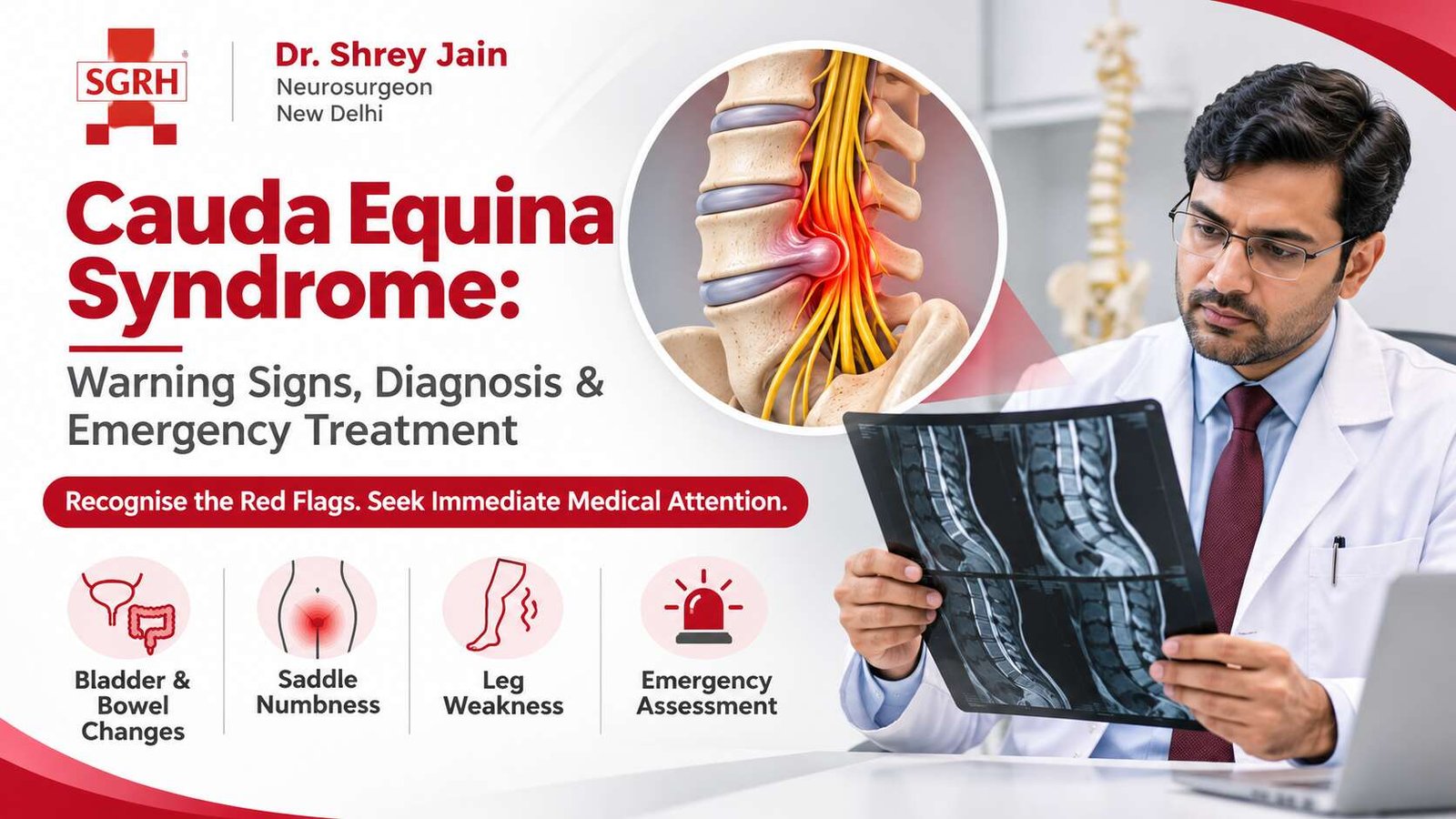
Severe lower back pain accompanied by numbness, leg weakness or changes in bladder and bowel control should never be ignored. In some cases, these symptoms may indicate a serious neurological condition known as Cauda Equina Syndrome (CES).
Cauda Equina Syndrome occurs when the bundle of nerve roots at the lower end of the spinal cord becomes compressed. These nerves help control sensation and movement in the legs, as well as bladder, bowel and sexual functions.
It is considered a medical emergency because delayed diagnosis and treatment can result in permanent nerve damage.
Understanding its warning signs, causes and treatment options can help patients and families recognise the condition and seek immediate medical attention.
What Is Cauda Equina Syndrome?
The cauda equina is a group of nerve roots located at the lower end of the spinal canal. The name means “horse’s tail” because of the appearance of these nerves.
These nerve roots carry signals between the brain, spinal cord and lower body.
When these nerves become severely compressed, their normal functioning may be affected. This condition is called Cauda Equina Syndrome.
Unlike routine lower back pain, CES can affect important neurological functions, including bladder and bowel control.
It requires urgent assessment by an appropriate medical specialist.
What Are the Common Causes of Cauda Equina Syndrome?
Several conditions can cause compression of the cauda equina nerve roots.
1. Severe Herniated or Slipped Disc
A large lumbar disc herniation can press against multiple nerve roots in the lower spine, potentially causing Cauda Equina Syndrome.
This is one of the recognised causes of the condition.
2. Spinal Canal Stenosis
Spinal stenosis refers to narrowing of the spinal canal. Severe narrowing may compress the nerve roots and, in certain cases, contribute to CES.
3. Spinal Tumours
Tumours located in or around the spinal canal may compress nerve structures and interfere with normal neurological function.
4. Spinal Injuries
Trauma, fractures or other serious injuries affecting the lumbar spine can cause compression of the cauda equina nerves.
5. Spinal Infections and Inflammation
Certain infections, including spinal epidural abscesses, can create pressure around the nerve roots and require urgent treatment.
Warning Signs and Symptoms of Cauda Equina Syndrome
Recognising the symptoms early is extremely important because the condition can progress rapidly.
Some important warning signs include:
1. Bladder Dysfunction
Changes in bladder function are among the most concerning symptoms.
These may include:
- Difficulty starting urination.
- Reduced sensation of bladder fullness.
- Inability to empty the bladder.
- New urinary retention.
- Loss of bladder control.
2. Bowel Dysfunction
Patients may experience changes in bowel control, difficulty sensing bowel movements or loss of bowel control.
3. Saddle Anaesthesia
Saddle anaesthesia refers to reduced or altered sensation around the areas that would touch a saddle.
These areas may include:
- Inner thighs.
- Groin.
- Genital region.
- Buttocks.
- Area around the anus.
This is an important warning sign that requires emergency assessment.
4. Leg Weakness
Compression of nerve roots may cause weakness in one or both legs.
Some patients may experience difficulty walking, reduced muscle strength or problems lifting their feet.
5. Severe Lower Back Pain
Severe lower back pain, especially when accompanied by neurological symptoms, may indicate significant nerve compression.
Pain may also radiate into one or both legs.
6. Sexual Dysfunction
Changes in genital sensation or sexual function may occur due to involvement of the affected nerve roots.
Important: New bladder or bowel dysfunction, saddle numbness or progressive leg weakness requires immediate emergency medical evaluation. Do not wait for symptoms to improve or for a routine appointment.
How Is Cauda Equina Syndrome Diagnosed?
Early and accurate diagnosis is essential to prevent further neurological damage.
A neurosurgeon or emergency medical team may recommend the following assessments:
1. Neurological Examination
The doctor evaluates:
- Muscle strength in the legs.
- Sensation in different body areas.
- Reflexes.
- Walking ability and coordination.
- Relevant bladder and bowel symptoms.
2. MRI of the Lumbar Spine
MRI is the key imaging investigation when Cauda Equina Syndrome is suspected.
It helps identify nerve compression and possible underlying causes, such as a large herniated disc, tumour or other spinal abnormalities.
3. Additional Investigations
Depending on the clinical situation, additional investigations may include bladder assessment, post-void residual measurement, CT imaging or blood tests.
These investigations help the medical team understand the underlying problem and plan appropriate treatment.
What Are the Treatment Options for Cauda Equina Syndrome?
Cauda Equina Syndrome generally requires emergency specialist management.
When significant nerve compression is confirmed, urgent surgical decompression is often necessary.
1. Emergency Spinal Decompression Surgery
The main objective of surgery is to relieve pressure on the compressed nerve roots.
Depending on the underlying cause, the procedure may involve:
- Lumbar decompression.
- Discectomy to remove the compressing disc material.
- Laminectomy to create additional space in the spinal canal.
- Removal of another compressive lesion when indicated.
The surgical approach depends on the patient’s diagnosis, imaging findings and overall condition.
2. Minimally Invasive Spine Surgery
In selected patients, minimally invasive techniques may be considered to address the underlying compression.
However, the choice of procedure depends on the urgency, anatomy and extent of nerve compression. The priority is safe and timely decompression rather than selecting a particular surgical technique.
Learn more about Spine Surgery and treatment options.
3. Rehabilitation After Surgery
Recovery may involve a structured rehabilitation programme depending on the extent of nerve injury and the patient’s neurological condition.
Rehabilitation may include:
- Physiotherapy.
- Mobility training.
- Strengthening exercises.
- Bladder and bowel rehabilitation when required.
- Occupational therapy.
- Ongoing neurological assessment.
Recovery varies significantly between patients. Some symptoms may improve after surgery, while established nerve damage may result in long-term difficulties.
Why Is Early Treatment Important?
Cauda Equina Syndrome is a time-sensitive medical emergency.
Prolonged compression of the nerve roots can increase the risk of permanent neurological problems.
Delayed treatment may result in:
- Persistent bladder dysfunction.
- Bowel control difficulties.
- Chronic lower back or leg pain.
- Permanent numbness.
- Long-term leg weakness.
- Sexual dysfunction.
- Mobility limitations.
Early recognition, urgent MRI assessment and timely specialist management are important for reducing the risk of lasting complications.
Can Cauda Equina Syndrome Be Prevented?
Not every case of Cauda Equina Syndrome can be prevented because the condition may develop due to different spinal problems.
However, maintaining spinal health and seeking medical advice for concerning symptoms are important.
Some general recommendations include:
- Maintain appropriate physical activity.
- Practise correct lifting techniques.
- Avoid ignoring persistent or worsening back pain.
- Follow medical advice for diagnosed spinal conditions.
- Seek prompt assessment after significant spinal injuries.
- Do not ignore new bladder, bowel or saddle sensory changes.
These measures do not guarantee prevention but can support better spinal health and timely medical attention.
When Should You Consult a Neurosurgeon?
You should seek immediate emergency medical assessment if you experience:
- New difficulty passing urine.
- Sudden loss of bladder or bowel control.
- Numbness around the groin or inner thighs.
- New or progressive weakness in the legs.
- Severe lower back pain accompanied by neurological symptoms.
These symptoms should not be managed through home remedies or routine physiotherapy without first ruling out serious nerve compression.
For patients requiring specialist assessment of brain and spine conditions, Dr. Shrey Jain provides neurosurgical consultation in New Delhi.
He is associated with Sir Ganga Ram Hospital and offers evaluation for various brain and spinal conditions.
Frequently Asked Questions About Cauda Equina Syndrome
1. Is Cauda Equina Syndrome a medical emergency?
Yes. Cauda Equina Syndrome is a medical emergency because compression of the nerve roots can cause permanent damage if treatment is delayed.
2. Can a slipped disc cause Cauda Equina Syndrome?
Yes. A large lumbar disc herniation can compress multiple nerve roots and cause Cauda Equina Syndrome.
3. What is the most important warning sign of Cauda Equina Syndrome?
New bladder dysfunction, saddle numbness and progressive leg weakness are important warning signs. Any of these symptoms in the appropriate clinical context requires urgent assessment.
4. Is MRI necessary for diagnosing Cauda Equina Syndrome?
MRI of the lumbar spine is the key investigation when CES is suspected because it helps identify the location and cause of nerve compression.
5. Does every patient with Cauda Equina Syndrome need surgery?
When significant nerve compression is confirmed, urgent surgical decompression is generally required. The exact treatment depends on the underlying cause and clinical findings.
6. Can patients recover completely after Cauda Equina Syndrome surgery?
Recovery varies. Some patients experience substantial improvement, while others may have persistent bladder, bowel, sensory or mobility problems. The outcome depends on several factors, including the severity and duration of nerve compression and the extent of nerve injury.
Conclusion
Cauda Equina Syndrome is a serious spinal condition that requires immediate medical attention. Recognising symptoms such as bladder dysfunction, bowel changes, saddle numbness and leg weakness can help patients seek timely care.
Accurate diagnosis, emergency MRI evaluation and appropriate surgical management play important roles in treating this condition.
If you or someone you know experiences symptoms suggestive of Cauda Equina Syndrome, seek emergency medical attention without delay.